
Home › Private colleges
College guide · Private nonprofit
Private colleges and universities in California
Private colleges in California range from world-famous research universities to small liberal arts colleges and faith-based schools. Sticker prices are high, but many offer generous need-based and merit aid.
20
private college profiles on CalChannel
3
kinds of schools: research universities, liberal arts colleges and faith-based universities
5
Claremont Colleges profiled: all five undergraduate colleges
All private college profiles
Compare private colleges in California
Each of the 20 private colleges in California below has a full profile covering admissions, cost, campus life and location.

| College | Location | Type and known for |
|---|---|---|
| Stanford University | Stanford, near Palo Alto | Research university; engineering, computer science and Silicon Valley ties |
| Caltech | Pasadena | Small research institute focused on science and engineering |
| USC | Los Angeles | Research university; film, business and a large alumni network |
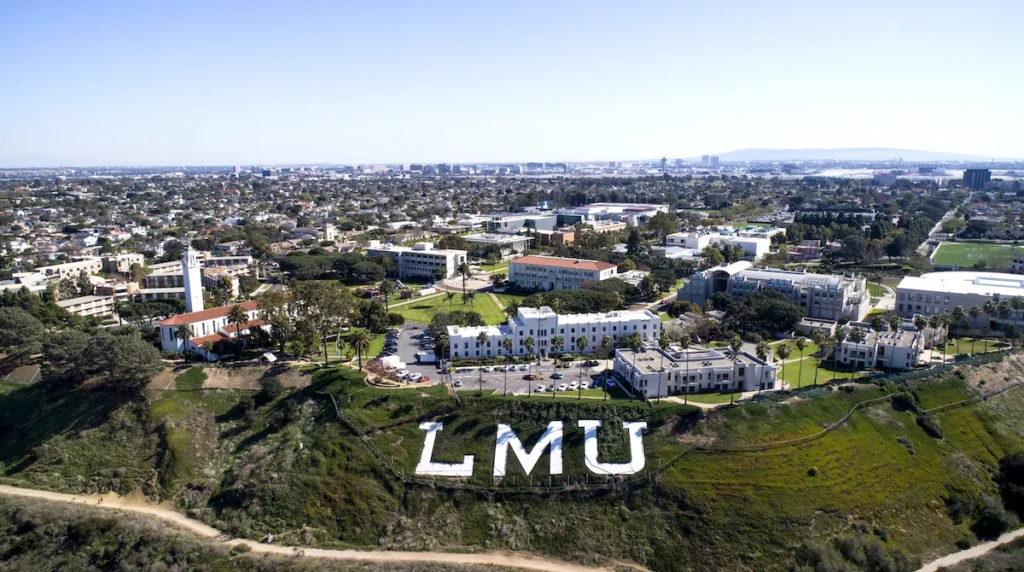
| Loyola Marymount (LMU) | Los Angeles | Jesuit university; film, business and communications |
| Pomona College | Claremont | Liberal arts college and member of the Claremont Colleges |
| Harvey Mudd College | Claremont | STEM-focused liberal arts college in the Claremont Colleges |
| Claremont McKenna College | Claremont | Liberal arts college in the Claremont Colleges |
| Scripps College | Claremont | Women’s liberal arts college in the Claremont Colleges |
| Pitzer College | Claremont | Liberal arts college in the Claremont Colleges |
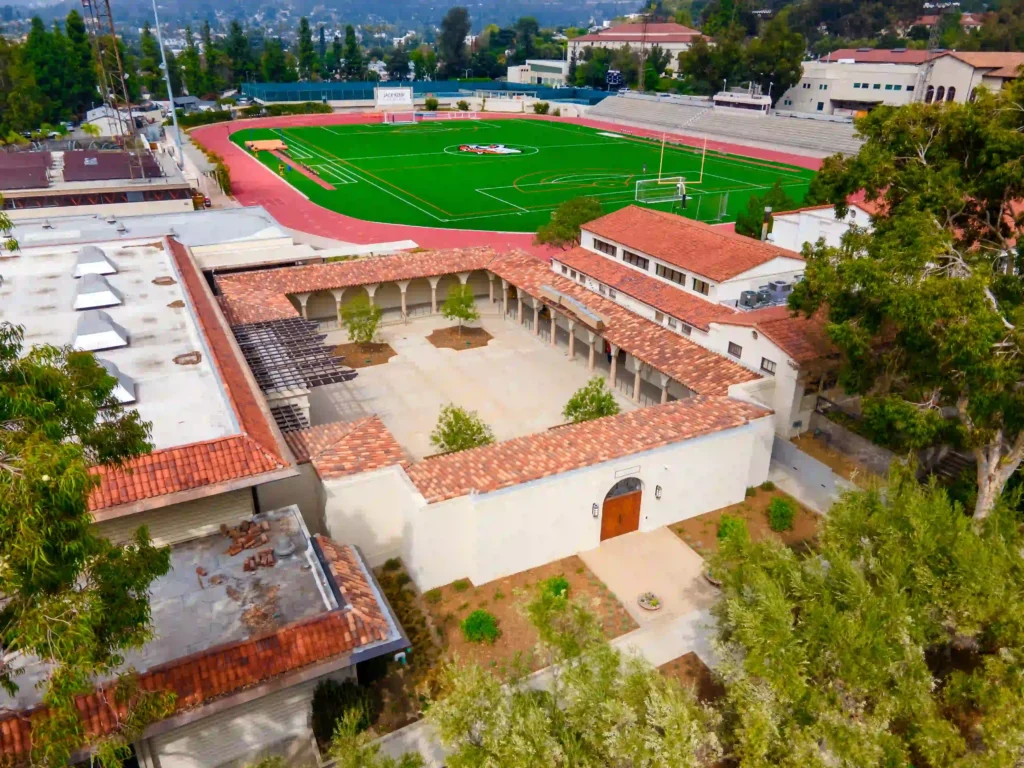
| Occidental College | Los Angeles (Eagle Rock) | Liberal arts college in an urban setting |
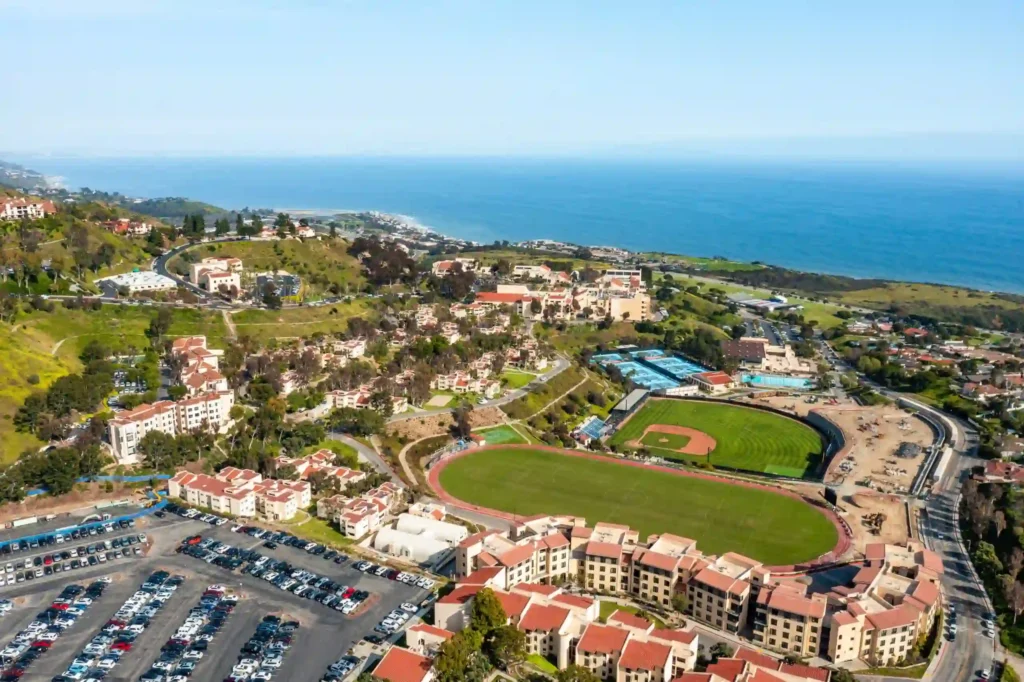
| Pepperdine University | Malibu | Christian university; business, law and an oceanfront campus |
| Chapman University | Orange | Mid-sized university; film, business and law |
| Santa Clara University | Santa Clara, Silicon Valley | Jesuit university; engineering and business |
| University of San Francisco | San Francisco | Jesuit university; nursing, business and an urban campus |
| University of San Diego | San Diego | Catholic university; a different school from UC San Diego |
| University of the Pacific | Stockton | Health sciences, pharmacy and dentistry |
| California Baptist University | Riverside | Christian university; nursing and engineering |
| Biola University | La Mirada | Christian university |
| Westmont College | Montecito, Santa Barbara County | Evangelical Christian liberal arts college |
| Azusa Pacific University | Azusa | Evangelical Christian university |
For admit rates, 2026-27 costs and average net prices side by side, see the private college comparison table below, then check each college’s net price calculator for your own estimate.
Official sources on private colleges in California: College Navigator from the U.S. Department of Education, the California Student Aid Commission for Cal Grants and the Common App.
20 private colleges compared
Private college acceptance rates and real costs, side by side
For Fall 2025, first-year admit rates at these private colleges ranged from 3.8% at Stanford and Caltech to 81.4% at California Baptist University; Azusa Pacific, whose latest published figure is for Fall 2024, admitted 88.4%. Several now list on-campus budgets near or above $100,000 a year, but the average net price for students who receive grant aid ranges from about $14,500 at Caltech to $66,600 at Pepperdine, so the sticker price says little about what most families pay.
| College | First-year admit rate | Transfer admit rate | Cost on campus, 2026-27 | Average net price, 2023-24 |
|---|---|---|---|---|
| Stanford UniversityStanford | 3.8%2,302 of 60,646 admitted · Fall 2025 | 2.3%102 of 4,532 admitted · Fall 2025 | $97,545 | $25,078 |
| CaltechPasadena | 3.8%428 of 11,285 admitted · Fall 2025 | 6.2%10 of 162 admitted · Fall 2025 | $98,622 | $14,513 |
| Pomona CollegeClaremont | 6.9%861 of 12,470 admitted · Fall 2025 | Applications not published | $95,670Billed charges | $19,938 |
| Claremont McKenna CollegeClaremont | 9.4%655 of 6,939 admitted · Fall 2025 | 8.1%25 of 307 admitted · Fall 2025 | $101,990 | $33,895 |
| USCLos Angeles | 11.2%9,345 of 83,488 admitted · Fall 2025 | 27.1%2,929 of 10,827 admitted · Fall 2025 | $103,162 | $43,412 |
| Harvey Mudd CollegeClaremont | 12.3%643 of 5,217 admitted · Fall 2025 | 2.9%4 of 136 admitted · Fall 2025 | $104,512 | $43,966 |
| Pitzer CollegeClaremont | 26.9%989 of 3,683 admitted · Fall 2025 | 44.2%99 of 224 admitted · Fall 2025 | $96,706 | $34,979 |
| Scripps CollegeClaremont | 39.9%1,288 of 3,230 admitted · Fall 2025 | 31.6%37 of 117 admitted · Fall 2025 | $97,574Up to $98,574 with travel | $44,396 |
| Occidental CollegeLos Angeles | 44.8%3,359 of 7,490 admitted · Fall 2025 | 35.5%131 of 369 admitted · Fall 2025 | $95,365 | $48,400 |
| Santa Clara UniversitySanta Clara | 47.9%9,592 of 20,032 admitted · Fall 2025 | 64.7%780 of 1,206 admitted · Fall 2025 | $92,556 | $53,883 |
| Loyola Marymount (LMU)Los Angeles | 48.2%10,992 of 22,798 admitted · Fall 2025 | 56.2%1,706 of 3,036 admitted · Fall 2025 | $99,289 | $59,926 |
| University of San DiegoSan Diego | 53.6%9,359 of 17,468 admitted · Fall 2025 | 64.6%1,119 of 1,731 admitted · Fall 2025 | $88,397 | $37,918 |
| University of San FranciscoSan Francisco | 61.7%15,358 of 24,888 admitted · Fall 2024 | 55.1%1,077 of 1,956 admitted · Fall 2024 | $89,298 | $45,443 |
| University of the PacificStockton | 69.1%5,977 of 8,656 admitted · Fall 2025 | 78.6%565 of 719 admitted · Fall 2025 | $78,536Direct costs only | $31,670 |
| Pepperdine UniversityMalibu | 69.4%9,331 of 13,445 admitted · Fall 2025 | 55.3%466 of 842 admitted · Fall 2025 | $99,258 | $66,585 |
| Chapman UniversityOrange | 72.1%10,642 of 14,769 admitted · Fall 2025 | 61.0%818 of 1,340 admitted · Fall 2025 | $94,376First-year budget | $47,902 |
| Biola UniversityLa Mirada | 74.8%2,808 of 3,753 admitted · Fall 2024 | 64.1%591 of 922 admitted · Fall 2024 | $73,628 | $34,082 |
| Westmont CollegeMontecito | 77.0%1,913 of 2,483 admitted · Fall 2024 | 63.3%155 of 245 admitted · Fall 2024 | $79,300 | $32,172 |
| California Baptist UniversityRiverside | 81.4%6,868 of 8,438 admitted · Fall 2025 | 80.3%1,841 of 2,292 admitted · Fall 2025 | $61,386Direct costs only | $27,862 |
| Azusa Pacific UniversityAzusa | 88.4%3,010 of 3,404 admitted · Fall 2024 | Applications not published | $68,470 | $26,143 |
Sources: admission figures come from each college’s Common Data Set 2025-26, except Pomona College, which reports its Class of 2029 admission results in college announcements, the University of San Francisco, Biola and Westmont, whose latest Common Data Sets cover Fall 2024, and Azusa Pacific, whose Fall 2024 figures come from the federal IPEDS survey because it has not published a Common Data Set since 2020-21. Scripps lists its on-campus budget as a range; the table shows the lower figure. Costs are each college’s 2026-27 budget for a student living on campus; Pomona’s figure is its billed charges, and Pacific’s and California Baptist’s cover direct costs only. Average net price is the National Center for Education Statistics’ College Navigator figure for 2023-24 first-time, full-time students who received grant aid.
How private colleges work
What sets private colleges in California apart
Each private college sets its own rules, so check every school’s requirements individually.
Own admission rules
Most private colleges use the Common App or their own application, with essays, recommendations and their own testing policy.
Need-based and merit aid
Many private colleges in California use their endowments to reduce the price for admitted students, sometimes below what a public university would cost.
Different sizes and missions
Options include large research universities, small liberal arts colleges and faith-based universities.
How to apply
Applying to private colleges, step by step
Deadlines at private colleges in California are often earlier than UC and CSU. See our deadlines guide.
Step 1
Build your list
Mix reach, match and likely schools, and run each college’s net price calculator early.
Step 2
Apply
Most use the Common App or a school application. Some offer Early Action or Early Decision in the fall.
Step 3
Apply for aid
File the FAFSA, and the CSS Profile if a college requires it. Search for scholarships too.
Step 4
Compare offers
Compare net cost, not sticker price, and ask colleges to review your aid if your finances changed.
FAQ
Common questions
Which private colleges in California are hardest to get into?
For Fall 2025, Stanford and Caltech each admitted 3.8% of first-year applicants, Pomona College about 6.9%, Claremont McKenna 9.4%, USC 11.2% and Harvey Mudd 12.3%. Colleges such as Pepperdine, Chapman, Biola, Westmont, California Baptist University and Azusa Pacific admitted most applicants. See the comparison table for all 20.
Are private colleges always more expensive than the UC or CSU?
Not always. The sticker price is higher, but need-based aid at some private colleges in California can bring the real cost close to, or below, a public university. Compare net prices, not published tuition.
Can I use a Cal Grant at a private college?
Yes. Cal Grant awards can be used at eligible private colleges in California. For 2026-27, the maximum Cal Grant A at private colleges is $4,000 to $9,358, according to the California Student Aid Commission. See our guide to paying for college.
What are the Claremont Colleges?
A group of neighboring colleges in Claremont that share facilities and let students take classes across campuses. CalChannel profiles all five undergraduate colleges: Pomona, Harvey Mudd, Claremont McKenna, Scripps and Pitzer.
Do private colleges require the SAT or ACT?
Policies differ. Many are test-optional, some require scores and a few are test-blind. Check each college’s admissions page for the current year.
Is USC part of the University of California?
No. USC is a private university with no connection to the UC system. See our UC campus guide for the public options.
Keep exploring