
Home › Cal State (CSU)
College guide · Public universities
California State University (CSU): a guide to Cal State campuses
The California State University is the largest four-year public university system in the country. Its campuses focus on teaching and career-ready bachelor’s and master’s degrees, usually at a lower cost than the UC.
22
universities across California in the CSU system
1
application for every CSU campus through Cal State Apply
0
weight given to SAT or ACT scores in admission
All CSU profiles
Compare the California State University campuses
Each California State University profile covers admissions, cost, campus life and location.

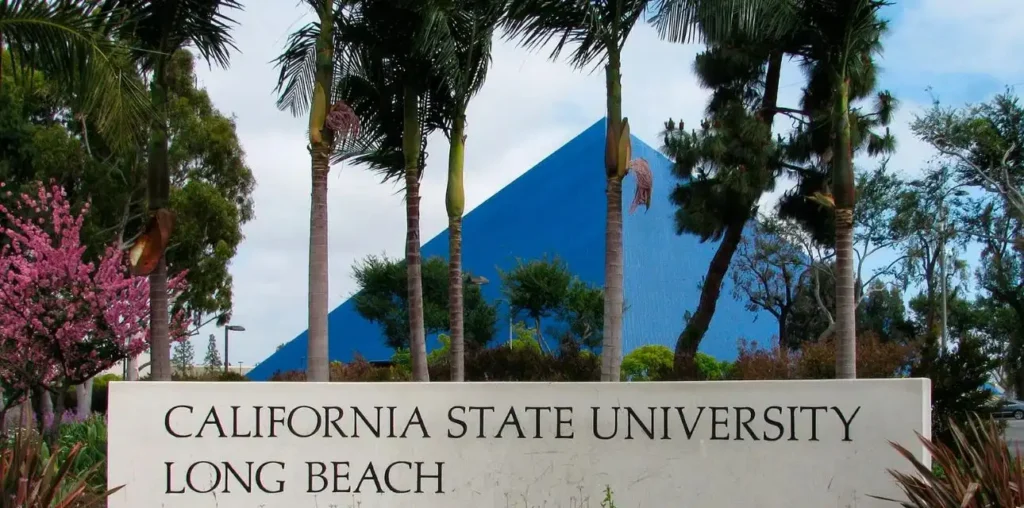

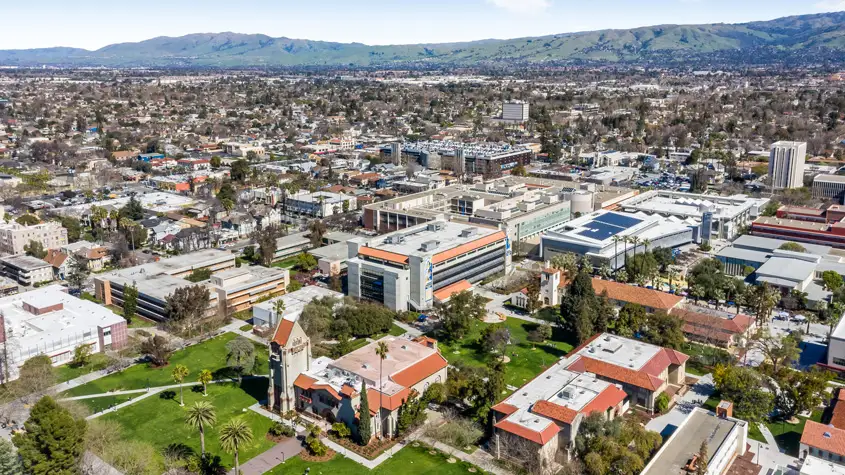
| Campus | Location | Known for |
|---|---|---|
| San Diego State (SDSU) | San Diego | A large, research-active CSU with business and public health programs |
| Cal Poly San Luis Obispo | San Luis Obispo, Central Coast | “Learn by doing”: engineering, agriculture and architecture |
| Cal Poly Pomona | Pomona, Los Angeles County | Polytechnic: engineering, architecture and hospitality management |
| Cal State Long Beach (CSULB) | Long Beach | A large, affordable campus with arts and engineering programs |
| Cal State Fullerton (CSUF) | Fullerton, Orange County | Business, communications and one of the largest CSU enrollments |
| Cal State Northridge (CSUN) | Northridge, San Fernando Valley | Music, film and deaf studies |
| San José State (SJSU) | San José, Silicon Valley | Engineering and business with close ties to the tech industry |
| CSU Monterey Bay (CSUMB) | Seaside, Monterey Bay | A smaller coastal campus with marine and environmental science |
| Chico State | Chico, Northern California | A residential college town with agriculture and strong campus life |
| CSU San Bernardino | San Bernardino, Inland Empire | Access for first-generation students in the Inland Empire |
| CSU Dominguez Hills | Carson, South Bay Los Angeles | Flexible programs for working and transfer students |
For admit rates and net prices at all 22 campuses side by side, see the CSU comparison table below.
Official sources: Cal State Apply for requirements and deadlines, and the California State University system website for campus facts.
All 22 campuses compared
CSU acceptance rates and net prices, campus by campus
Most Cal State campuses admit the large majority of eligible applicants: 15 of the 22 admitted more than 90% of first-year applicants in their latest reported year. A few are far more selective, led by Cal Poly San Luis Obispo at 30.0% and San Diego State at 37.4% for Fall 2025. Fall 2025 transfer odds range from 21.2% at Cal Poly SLO to 88.3% at CSU San Bernardino, and the average net price for aided students runs from about $4,500 to $17,500 a year.
| Campus | First-year admit rate | Transfer admit rate | Average net price, 2023-24 |
|---|---|---|---|
| Cal Poly San Luis ObispoSan Luis Obispo | 30.0%21,367 of 71,309 admitted · Fall 2025 | 21.2%2,308 of 10,899 admitted · Fall 2025 | $17,453 |
| San Diego StateSan Diego | 37.4%35,709 of 95,444 admitted · Fall 2025 | 54.9%9,093 of 16,556 admitted · Fall 2025 | $14,704 |
| Cal State Long BeachLong Beach | 45.4%40,105 of 88,276 admitted · Fall 2025 | 50.2%13,204 of 26,319 admitted · Fall 2025 | $10,607 |
| Cal Poly PomonaPomona | 74.0%35,688 of 48,258 admitted · Fall 2025 | 71.4%9,053 of 12,677 admitted · Fall 2025 | $11,940 |
| San José StateSan José | 80.4%29,845 of 37,124 admitted · Fall 2025 | 82.9%7,662 of 9,242 admitted · Fall 2025 | $13,892 |
| CSU BakersfieldBakersfield | 84.2%12,230 of 14,532 admitted · Fall 2025 | 71.0%3,394 of 4,782 admitted · Fall 2025 | $6,489 |
| Cal State FullertonFullerton | 88.1%48,716 of 55,289 admitted · Fall 2025 | 77.1%17,127 of 22,217 admitted · Fall 2025 | $7,064 |
| Chico StateChico | 91.1%20,528 of 22,542 admitted · Fall 2025 | 76.0%6,289 of 8,280 admitted · Fall 2025 | $14,630 |
| Cal State LALos Angeles | 91%32,723 applicants · Fall 2024 | No Fall 2025 data | $4,460 |
| Cal State Northridge (CSUN)Northridge, Los Angeles | 92.5%30,842 of 33,350 admitted · Fall 2024 | 72.0%10,027 of 13,924 admitted · Fall 2024 | $7,536 |
| Cal Poly HumboldtArcata | 93.0%13,981 of 15,032 admitted · Fall 2025 | 84.7%3,877 of 4,576 admitted · Fall 2025 | $14,090 |
| CSU Dominguez HillsCarson | 93%19,921 applicants · Fall 2024 | No Fall 2025 data | $9,175 |
| Sonoma StateRohnert Park | 93%11,246 applicants · Fall 2024 | No Fall 2025 data | $14,614 |
| CSU San BernardinoSan Bernardino | 94.3%14,095 of 14,947 admitted · Fall 2025 | 88.3%6,497 of 7,356 admitted · Fall 2025 | $5,231 |
| Sacramento StateSacramento | 94%27,702 applicants · Fall 2024 | No Fall 2025 data | $10,110 |
| CSU San MarcosSan Marcos | 95.1%19,864 of 20,881 admitted · Fall 2025 | 83.0%5,410 of 6,519 admitted · Fall 2025 | $10,241 |
| CSU Channel IslandsCamarillo | 95%8,810 applicants · Fall 2024 | No Fall 2025 data | $10,632 |
| Fresno StateFresno | 95%21,521 applicants · Fall 2024 | No Fall 2025 data | $7,834 |
| San Francisco StateSan Francisco | 96%28,221 applicants · Fall 2024 | No Fall 2025 data | $13,168 |
| Cal State East BayHayward | 97%11,867 applicants · Fall 2024 | No Fall 2025 data | $9,850 |
| CSU Monterey BaySeaside, Monterey Bay | 97%14,933 applicants · Fall 2024 | No Fall 2025 data | $14,493 |
| Stanislaus StateTurlock | 98%5,419 applicants · Fall 2024 | No Fall 2025 data | $7,433 |
Sources: Fall 2025 first-year and transfer figures come from each campus’s Common Data Set 2025-26; CSUN’s most recent Common Data Set covers Fall 2024, so its figures are for that year. For the 10 campuses without a published 2025-26 Common Data Set, first-year figures are federal data for Fall 2024 from the National Center for Education Statistics’ College Navigator, which reports the share admitted but not transfer admissions. Average net price is College Navigator’s 2023-24 figure for first-time, full-time students who received grant aid, after grants and scholarships. Campuses with a CalChannel profile are linked.
How the CSU system works
What every California State University campus has in common
Some campuses are much more competitive than others, but the basic rules are shared.
Teaching-focused universities
CSU campuses concentrate on undergraduate and master’s education, with hands-on programs tied to California’s workforce.
A–G courses and GPA
Freshman admission is based on A–G courses and GPA. The California State University does not use SAT or ACT scores.
Impacted programs
When a campus or major gets more qualified applicants than it has room for, it is called impacted and uses higher standards.
How to apply
Applying to a Cal State, step by step
One application reaches every campus. See our application guide and deadlines.
Step 1
Complete A–G courses
Finish the required A–G courses. Your GPA in those courses is the main admission factor.
Step 2
Apply on Cal State Apply
You submit the California State University application in the fall. You can apply to several campuses and check whether your major is impacted.
Step 3
Apply for aid
File the FAFSA or California Dream Act Application for Cal Grant and CSU grants. See cost of attendance.
Step 4
Compare offers
Decisions arrive in late winter and spring. Compare aid offers before you commit.
FAQ
Common questions
What is the difference between a CSU and a UC?
The CSU focuses on teaching and career-oriented degrees and usually costs less. The UC focuses on research and offers doctoral programs. See our UC campus guide.
Which Cal State is hardest to get into?
For Fall 2025, Cal Poly San Luis Obispo admitted 30.0% of first-year applicants, San Diego State 37.4% and Cal State Long Beach 45.4%, according to their Common Data Sets, and impacted majors are even more competitive. Most other campuses admit more than 90% of applicants. See the comparison table for all 22.
Can I transfer to a CSU from a community college?
Yes. An Associate Degree for Transfer (ADT) from a California community college guarantees admission to the CSU system, though not to a specific campus or major. See our community colleges guide.
Is Cal Poly SLO a Cal State?
Yes. Cal Poly San Luis Obispo is part of the California State University system, even though its name doesn’t include “Cal State.”
How much does a Cal State cost?
California State University tuition is set systemwide and is lower than UC tuition, but housing and living costs vary by campus. Many California students qualify for grants that cover tuition. Read our guide to paying for college.
Keep exploring