
Home › University of California
College guide · Public universities
University of California (UC): a guide to all nine undergraduate campuses
The University of California is the state’s public research university system. Nine campuses admit undergraduates, and all of them share one application, one set of admission requirements and one tuition structure. This guide compares all nine UC schools side by side.
9
undergraduate campuses, plus UCSF for graduate health sciences
1
application for every UC campus you choose
0
weight given to SAT or ACT scores in admission
All UC profiles
Compare UC schools: all nine University of California campuses
Each University of California profile covers admissions, cost, campus life and location. Start with the campuses near where you want to live.
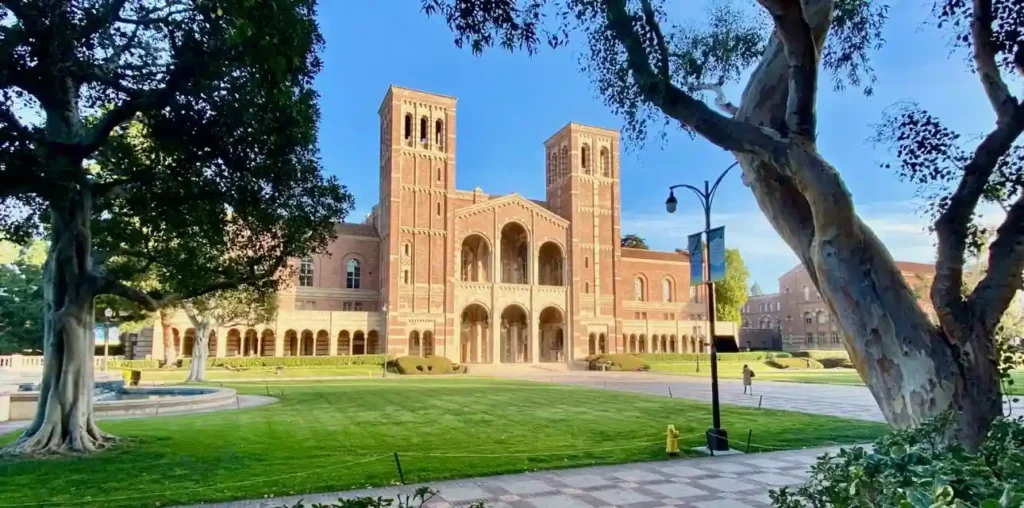


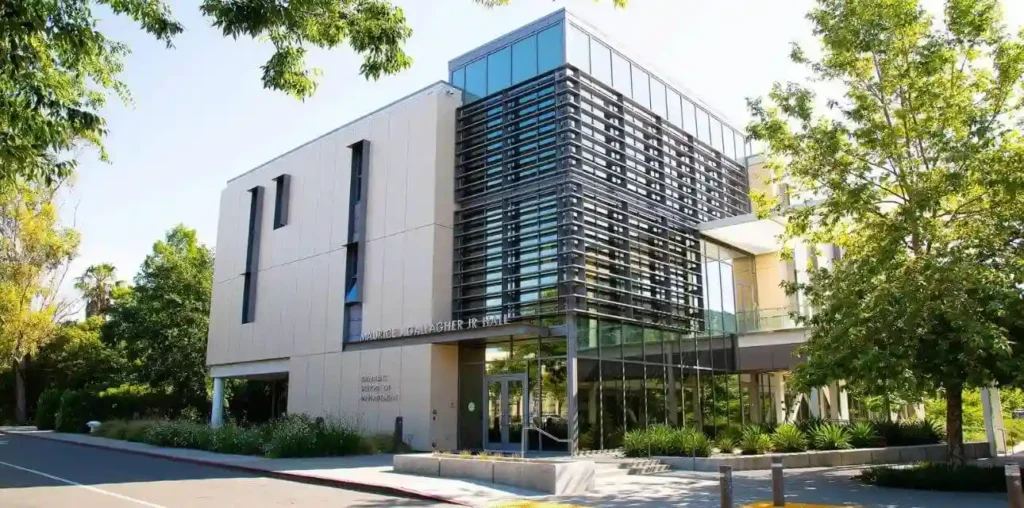
| Campus | Location | Known for |
|---|---|---|
| UC Berkeley | Berkeley, San Francisco Bay Area | The founding UC campus; engineering, computer science and physics |
| UCLA | Westwood, Los Angeles | Film and media, medicine, a large range of majors and athletics |
| UC San Diego | La Jolla, San Diego | Sciences, oceanography and a residential college system |
| UC Davis | Davis, near Sacramento | Agriculture, veterinary medicine and environmental science |
| UC Irvine | Irvine, Orange County | STEM, business and a large, diverse student body |
| UC Santa Barbara | Isla Vista, Santa Barbara County | Physical sciences and a campus on the Pacific coast |
| UC Santa Cruz | Santa Cruz, Monterey Bay | Marine science, a redwood-forest campus and residential colleges |
| UC Riverside | Riverside, Inland Empire | Diversity, social mobility and plant and agricultural science |
| UC Merced | Merced, San Joaquin Valley | The newest UC campus, with a focus on research and sustainability |
For Fall 2026 admit rates, GPA ranges and costs side by side, see the UC comparison table below.
Official sources: University of California Admissions for requirements and deadlines, and the University of California Office of the President for systemwide facts.
Fall 2026 admission data
UC acceptance rates and costs, campus by campus
For Fall 2026, first-year admit rates ranged from 10.5% at UC Berkeley to 94.7% at UC Merced. Transfer applicants had better odds than first-years at the six most selective campuses, but lower odds at Santa Cruz, Riverside and Merced, and on-campus budgets for California residents differed by more than $9,000 a year. Switch between first-year and transfer data, or sort the table to build your list.
| Campus | First-year admit rate | Transfer admit rate | Admitted GPA, middle 50% | Cost on campus, 2026-27 | Calendar |
|---|---|---|---|---|---|
| UC BerkeleyBerkeley, Bay Area | 10.5%13,967 of 133,154 admitted | 20.0%5,248 of 26,210 admitted | 4.16–4.28 | $54,674 | Semester |
| UCLAWestwood, Los Angeles | 10.8%15,903 of 146,692 admitted | 22.2%6,796 of 30,668 admitted | 4.20–4.30 | $45,500 | Quarter |
| UC San DiegoLa Jolla, San Diego | 27.2%38,571 of 141,767 admitted | 47.4%12,473 of 26,339 admitted | 4.12–4.28 | $47,283 | Quarter |
| UC IrvineIrvine, Orange County | 30.3%38,165 of 126,005 admitted | 36.4%9,839 of 27,004 admitted | 4.06–4.27 | $45,206 | Quarter |
| UC Santa BarbaraIsla Vista, Santa Barbara | 44.0%47,716 of 108,512 admitted | 61.6%11,620 of 18,870 admitted | 4.05–4.27 | $50,946 | Quarter |
| UC DavisDavis, near Sacramento | 45.8%48,015 of 104,864 admitted | 58.3%10,138 of 17,400 admitted | 4.00–4.25 | $49,009 | Quarter |
| UC Santa CruzSanta Cruz, Monterey Bay | 82.1%64,867 of 79,048 admitted | 67.5%9,141 of 13,546 admitted | 3.79–4.20 | $48,537 | Quarter |
| UC RiversideRiverside, Inland Empire | 88.2%63,958 of 72,542 admitted | 69.6%10,382 of 14,915 admitted | 3.66–4.17 | $46,539 | Quarter |
| UC MercedMerced, San Joaquin Valley | 94.7%46,812 of 49,426 admitted | 76.7%5,089 of 6,635 admitted | 3.57–4.16 | $48,654 | Semester |
Sources: University of California, first-year and transfer admit data for Fall 2026; GPA is UC’s middle-50% range for admitted first-years. Costs are each campus’s 2026-27 budget for a California resident living in university housing, before financial aid. Campuses build their budgets differently, so use them as a guide and see each campus profile for the full breakdown. UC lists the UC Merced Fall 2026 transfer admit rate as 67.5%, but its own counts (5,089 admits from 6,635 applicants) work out to 76.7%, which is the figure shown here.
How the UC system works
What every University of California campus has in common
The campuses differ in size, setting and selectivity, but the rules are set systemwide. That shared framework is what makes UC schools easy to compare.
Research universities
UC campuses grant bachelor’s, master’s and doctoral degrees, and undergraduates can often join faculty research.
A–G course requirements
Freshman applicants to the University of California need 15 approved A–G high school courses with a minimum GPA. Grades in those courses matter most.
Test-blind admission
The University of California does not use SAT or ACT scores to make admission decisions. Essays, called Personal Insight Questions, carry real weight.
How to apply
Applying to UC schools, step by step
One application reaches every campus. See our full application guide and deadlines. One application covers all UC schools, so you can apply to several campuses at once.
Step 1
Complete A–G courses
Plan your high school schedule so you finish the required A–G courses with strong grades.
Step 2
Submit the UC application
You submit the University of California application in the fall. Choose as many campuses as you like and answer four Personal Insight Questions.
Step 3
Apply for aid
File the FAFSA or California Dream Act Application to be considered for Cal Grant and UC aid. See UC tuition.
Step 4
Compare offers
Admission decisions arrive in spring. Compare aid offers before the May 1 decision deadline.
FAQ
Common questions
Which UC is the easiest to get into?
For Fall 2026, UC Merced admitted 94.7% of first-year applicants, UC Riverside 88.2% and UC Santa Cruz 82.1%, the highest rates in the system. UC Berkeley (10.5%) and UCLA (10.8%) were the most selective. See the comparison table for every campus.
Is UCSF one of the UC campuses?
Yes, but UC San Francisco only offers graduate and professional programs in health sciences. It does not admit freshmen, so undergraduates choose among the other nine campuses.
Can I transfer to a UC from a community college?
Yes. Transfer is a major path into the UC. Six campuses offer a Transfer Admission Guarantee (TAG) to eligible California community college students. See our community colleges guide.
Is USC part of the UC system?
No. The University of Southern California is a private university. See our private colleges guide.
How much does a UC cost?
Tuition is set systemwide by the University of California, but housing and living costs vary by campus. Most California students pay less than the sticker price after grants. Read how much UC tuition really costs.
Keep exploring