
University of California guide · By CalChannel Editorial Team · Updated September 30, 2026
UC San Diego (UCSD) is a public university, one of the ten campuses of the University of California, on about 1,200 acres in La Jolla. It admitted 27.2% of first-year applicants for Fall 2026, or 38,571 of 141,767, according to the University of California, and it enrolled 45,087 students in Fall 2025. New California students should budget $47,283 a year living on campus.
UC San Diego’s coastal campus, its striking Geisel Library and its reputation in science lead some families to assume it’s a private university. It isn’t. UCSD is a public UC campus with in-state tuition for California residents, and it has become one of the most applied-to universities in the country. Here’s what you need to know about its status, size, admission odds and cost.
| Fact | UC San Diego |
|---|---|
| Public or private | Public, University of California system |
| Location | La Jolla, in the city of San Diego |
| Founded | 1960, growing out of the Scripps Institution of Oceanography |
| Campus size | About 1,200 acres |
| Students (Fall 2025) | 45,087 total; 35,442 undergraduates |
| First-year admit rate | 27.2% (Fall 2026); 28.6% (Fall 2025) |
| Transfer admit rate | 47.4% (Fall 2026); 52.8% (Fall 2025) |
| Undergraduate colleges | Eight |
| Cost of attendance, on campus (2026-27) | $47,283 for California residents; $86,553 for nonresidents |
| U.S. News 2027 | No. 29 National Universities; No. 6 public |
Sources: University of California, UC San Diego admit data for Fall 2026; UC San Diego Common Data Set 2025-26; UC San Diego Financial Aid and Scholarships. Full list at the end of the article.
In This Article
Is UCSD a Private School?
No. UC San Diego is a public research university and one of the ten campuses of the University of California, the state’s public research university system. It is funded partly by the State of California, and California residents pay much lower tuition than students from other states.
The confusion is understandable. UCSD looks and performs like many elite private universities. U.S. News ranks it No. 6 among public universities and No. 29 among all national universities for 2027. It’s a member of the Association of American Universities, it runs a major academic medical center through UC San Diego Health, and it’s home to the Scripps Institution of Oceanography. But its status is public, and the practical difference shows up in the bill:
- California residents pay UC tuition and fees of $21,519 as new students in 2026-27, and many pay far less after grants
- Nonresidents add $39,270 in Nonresident Supplemental Tuition
- Admission runs through the shared UC application, not a separate private-college application
If you’re confusing UCSD with the private University of San Diego (USD) or with San Diego State University, those are separate schools. USD is a private Catholic university, and SDSU is a California State University campus with its own application.

How Big Is UCSD?
UC San Diego is big in two ways. Its campus covers about 1,200 acres of coastal bluffs and eucalyptus groves above the Pacific. And its student body is one of the largest in the UC system: 45,087 students in Fall 2025, including 35,442 undergraduates and 9,645 graduate students, according to its Common Data Set.
That size cuts both ways. Introductory classes in popular majors can be large, and the student-to-faculty ratio is about 20 to 1. But UCSD’s outcomes are strong for a campus this large. About 95% of first-year students return for a second year, 74% of the 2019 entering class graduated in four years, and 86% graduated within six.
UCSD’s Eight-College System
What makes a 35,000-undergraduate campus feel smaller is UCSD’s college system. Every undergraduate belongs to one of eight colleges: Revelle, John Muir, Thurgood Marshall, Earl Warren, Eleanor Roosevelt, Sixth, Seventh and Eighth. It works a bit like the college systems at Oxford and Cambridge.
Your college is separate from your major. Each college has its own general education requirements, academic advising and residential neighborhood, so the college you pick shapes your first two years as much as your major does. You rank the colleges when you apply, and it’s worth reading each one’s general education plan before you do.
UCSD also offers incoming undergraduates a two-year on-campus housing guarantee, as long as students live on campus for their entire admit year, keep their housing contract and meet housing deadlines. First-year students usually live in their own college’s residence halls.
UCSD Acceptance Rate
UC San Diego admitted 27.2% of first-year applicants for Fall 2026: 141,767 students applied and 38,571 were admitted, according to admit data published by the University of California. The middle 50% of those admits had high school GPAs between 4.12 and 4.28. A year earlier, UCSD admitted 28.6% of first-year applicants and 24.7% of California residents.
| Fall 2025 first-year applicants | Applied | Admitted | Admit rate | Enrolled |
|---|---|---|---|---|
| California residents | 87,584 | 21,677 | 24.7% | 5,431 |
| Out-of-state | 24,912 | 9,881 | 39.7% | 961 |
| International | 24,254 | 7,496 | 30.9% | 1,409 |
| All first-years | 136,750 | 39,054 | 28.6% | 7,801 |
Source: UC San Diego Common Data Set 2025-26. The University of California’s Fall 2026 snapshot doesn’t break admits down by residency, so Fall 2025 is the latest residency data.
Beyond the headline rate, two things shape your odds:
- Your major: computer science, data science and many engineering programs are capped and far more competitive than the campus average, so apply to the major you actually want
- The waitlist: for Fall 2025, 25,411 students accepted a waitlist spot and 5,284 were admitted from it
The usual UC rules apply. You need at least a 3.0 GPA in A-G courses as a California resident or 3.4 as a nonresident, the UC application is due November 30, and SAT and ACT scores are not considered. The application fee is $80 per campus for domestic applicants, with fee waivers for students with financial need.
UCSD Transfer Admission
UC San Diego admitted 47.4% of transfer applicants for Fall 2026, or 12,473 of 26,339, and 89.3% of admitted transfers came from California community colleges. For Fall 2025, the transfer admit rate was 52.8%. Either way, the transfer route is far more open than first-year admission, which makes a California community college a realistic path into UCSD. Capped majors apply to transfers too, so complete the major preparation courses early.
How Much Does UCSD Cost?
For new undergraduates entering in 2026-27, UC San Diego estimates tuition and fees of $21,519 for California residents. That includes $15,588 in UC systemwide tuition and fees, $2,511 in campus fees, a $3,195 health fee that can be waived with equivalent insurance, and a one-time $225 enrollment services fee.
| UCSD cost of attendance, new students 2026-27 | On campus | Off campus | With family |
|---|---|---|---|
| Tuition and fees | $21,519 | $21,519 | $21,519 |
| Housing | $13,761 | $14,015 | $3,955 |
| Food | $6,981 | $6,568 | $4,835 |
| Books and supplies | $1,236 | $1,236 | $1,236 |
| Personal expenses | $2,838 | $2,940 | $3,132 |
| Transportation | $948 | $2,145 | $2,883 |
| Total, California residents | $47,283 | $48,423 | $37,560 |
| Total, nonresidents | $86,553 | $87,693 | $76,830 |
Source: UC San Diego Financial Aid and Scholarships, Undergraduate Cost of Attendance, 2026 cohort.
Because UCSD is public, grants lower the price for many California families. UC says most California families earning $100,000 or less get enough grant and scholarship money to pay UC tuition in full through its Blue and Gold Opportunity Plan, and Cal Grants, Pell Grants and the Middle Class Scholarship can help with living costs. Our UC tuition guide explains how UC tuition is set and locked in.
Our take: UCSD’s health fee is the line many families miss. At $3,195 a year, it’s included in tuition and fees, but it can be waived if the student has equivalent insurance, often through a parent’s plan. Check the waiver deadline before the first bill arrives.
Where Is UCSD Located?
UC San Diego is in La Jolla, a coastal community in the city of San Diego, about 12 miles north of downtown. The main campus address is 9500 Gilman Drive, La Jolla, CA 92093. The UC San Diego Blue Line trolley connects campus with downtown San Diego, and the Torrey Pines coastline is next door.
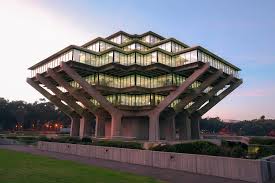
The campus’s best-known landmark is Geisel Library, the angular concrete building named for Theodor Geisel, better known as Dr. Seuss. UCSD’s Tritons compete in NCAA Division I in the Big West Conference.
Frequently Asked Questions
Is UCSD a private school?
No. UC San Diego is a public university and one of the ten University of California campuses. California residents pay in-state tuition, and nonresidents pay an additional $39,270 a year.
How big is the UCSD campus?
UCSD’s main campus in La Jolla covers about 1,200 acres. It enrolled 45,087 students in Fall 2025, including 35,442 undergraduates.
What is the UCSD acceptance rate?
UC San Diego admitted 27.2% of first-year applicants for Fall 2026, or 38,571 of 141,767, according to the University of California. For Fall 2025 the rate was 28.6%, and 24.7% for California residents.
Are UCSD and San Diego State the same school?
No. UCSD is a University of California campus in La Jolla. San Diego State University is a separate California State University campus with its own application.
How much does UCSD cost per year?
For new California students in 2026-27, UCSD estimates $47,283 living on campus, including $21,519 in tuition and fees. The estimate for nonresidents is $86,553.
Does UCSD require the SAT or ACT?
No. UC campuses, including UC San Diego, do not consider SAT or ACT scores in admission decisions.
The Bottom Line on UCSD
UC San Diego is a public University of California campus, not a private school, with about 1,200 acres in La Jolla and more than 45,000 students. It admitted 27.2% of first-year applicants for Fall 2026 and 47.4% of transfers, and its eight-college system makes a very large university feel more manageable.
For new California students, plan for about $47,300 a year on campus before aid. Apply by November 30, and compare UCSD with UCLA, UC Irvine, UC Berkeley and other UC campuses on the same application.
Sources
- University of California. “San Diego: First-Year Admit Data” and “Transfer Admit Data.” Fall 2026.
- UC San Diego Institutional Research. “Common Data Set 2025-26.” ucsd.edu.
- UC San Diego Financial Aid and Scholarships. “Undergraduate Cost of Attendance.” ucsd.edu.
- UC San Diego Housing, Dining and Hospitality. “Living on Campus.” ucsd.edu.
- University of California. “U.S. News 2027 Best Colleges Rankings.” universityofcalifornia.edu.
- The Cultural Landscape Foundation. “University of California, San Diego.” tclf.org.
- University of California. “Blue and Gold Opportunity Plan.” universityofcalifornia.edu.

CalChannel Editorial Team California college guides
The CalChannel editorial team researches and writes guides to California colleges, admissions and financial aid. We build our college profiles and aid guides from colleges’ own published data, federal IPEDS data and the California Student Aid Commission. Read our editorial policy.