
Home › Community colleges
College guide · Two-year public colleges
California community colleges: the low-cost path to a degree
California community colleges form the largest community college system in the country. Colleges are open to high school graduates and adults, cost far less than a four-year university and are one of the most common routes into the UC and CSU.
100+
community colleges across California
2
guaranteed transfer routes: ADT to the CSU and TAG to six UC campuses
$0
enrollment fees for students who qualify for the California College Promise Grant
All community college profiles
Compare California community colleges
Each of these California community colleges has a profile covering admissions, cost, programs and transfer.
| College | Location | Known for |
|---|---|---|
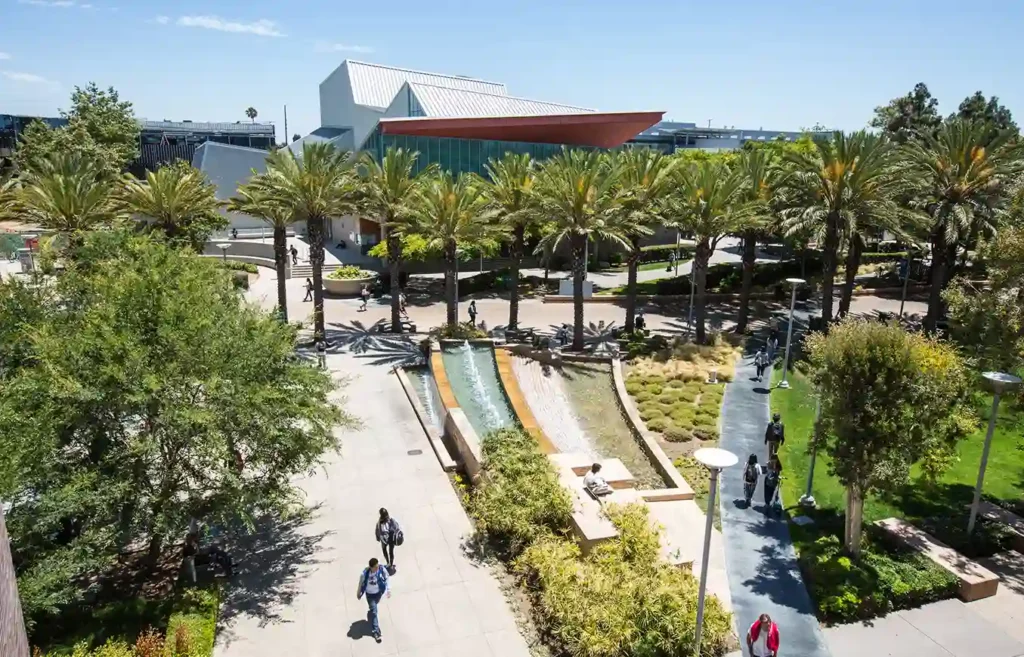
| Santa Monica College | Santa Monica | Strong transfer record to the UC, including UCLA |
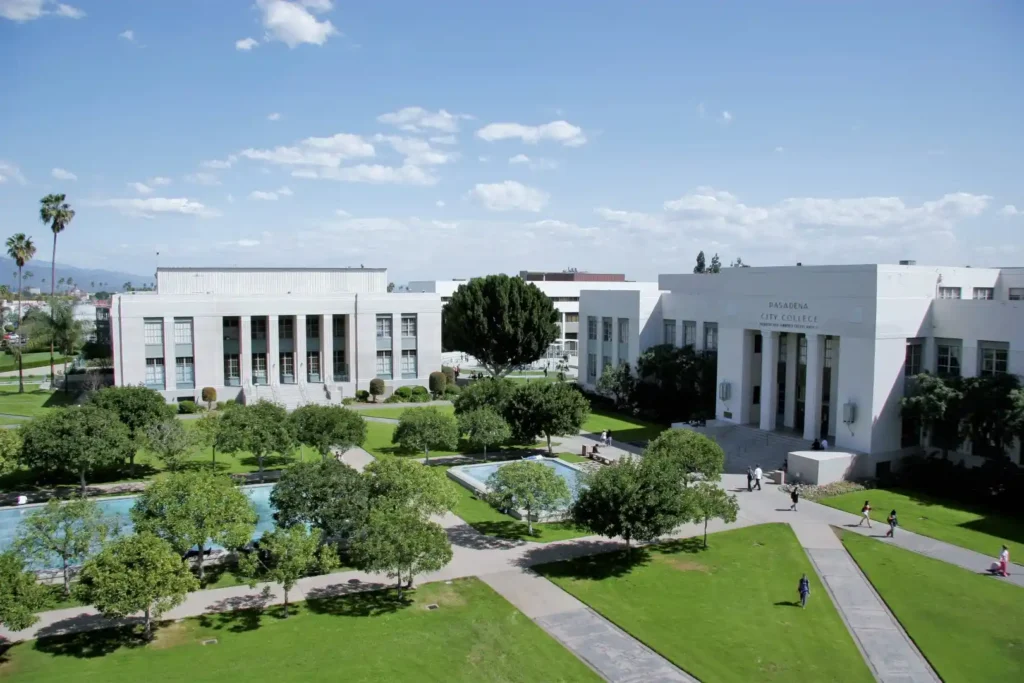
| Pasadena City College | Pasadena | Nursing and health programs and transfer |
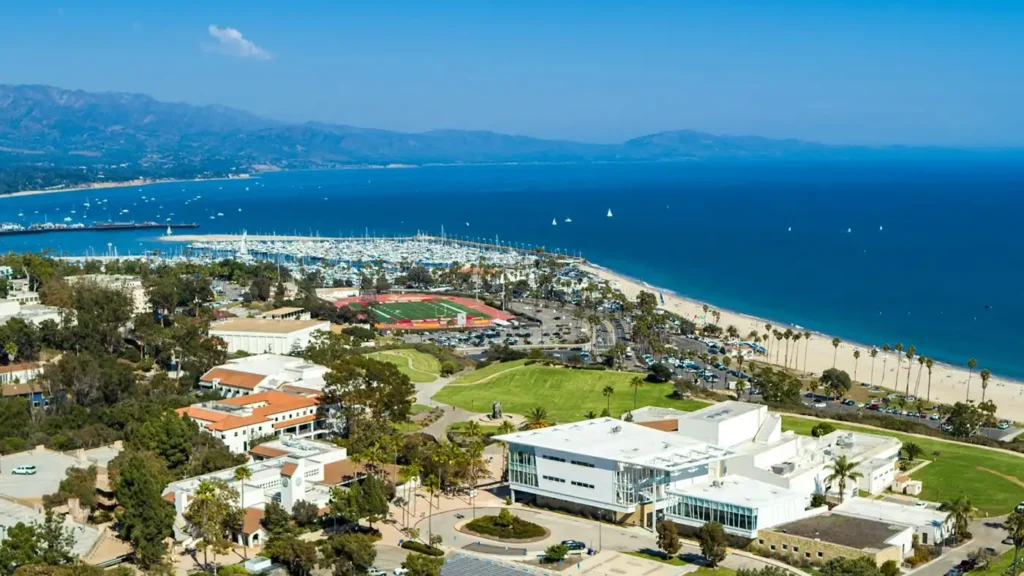
| Santa Barbara City College | Santa Barbara | A coastal campus with a strong transfer program |
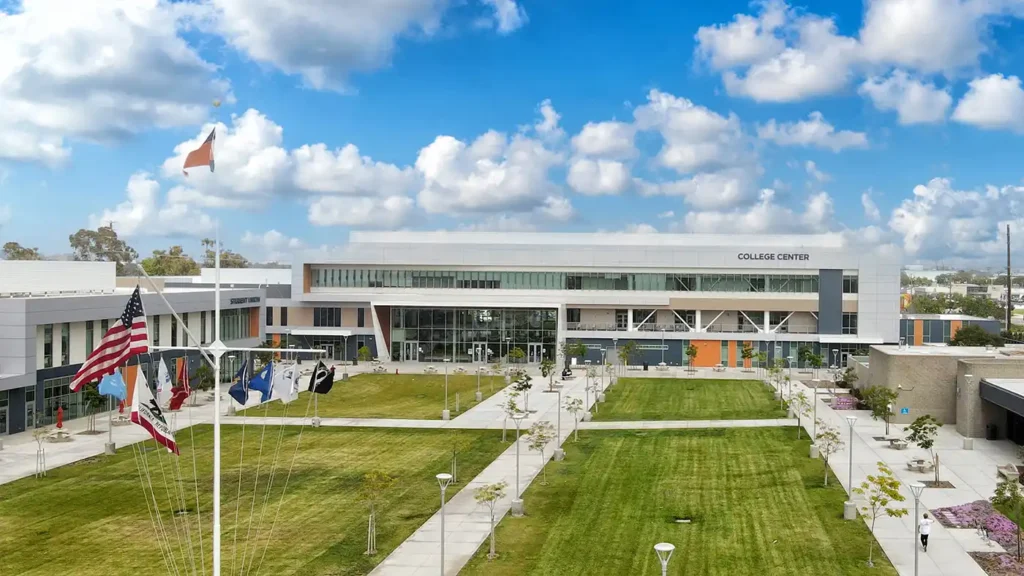
| Orange Coast College | Costa Mesa, Orange County | Large enrollment with transfer and career programs |
| Diablo Valley College | Pleasant Hill, East Bay | Transfer to UC and CSU campuses in Northern California |
For graduation and transfer rates, net prices and enrollment at 15 large colleges, see the community college comparison table below.
Official sources on California community colleges: the California Community Colleges Chancellor’s Office, CCCApply for applications and ASSIST for transfer course agreements.
15 large colleges compared
Community college graduation, transfer and cost, side by side
Community colleges don’t have acceptance rates, so the better question is how many students finish. Among these 15 large colleges, the share of full-time, first-time students who earned a credential or transferred within three years ranged from 40% at Long Beach City College to 74% at De Anza College. The average net price for aided students ran from about $5,700 at Santa Monica College to $14,200 at Santa Barbara City College.
| College | Graduated or transferred within 3 years | Returned for a second year | Average net price, 2023-24 | Students, Fall 2024 |
|---|---|---|---|---|
| De Anza CollegeCupertino | 74%68% earned a credential, 6% transferred first · Fall 2021 entrants | 76%Full-time students | $9,693 | 17,425 |
| Foothill CollegeLos Altos Hills | 67%56% earned a credential, 11% transferred first · Fall 2018 entrants | 58%Full-time students | $10,805 | 12,949 |
| Irvine Valley CollegeIrvine | 65%57% earned a credential, 8% transferred first · Fall 2021 entrants | 79%Full-time students | $5,821 | 13,018 |
| Orange Coast CollegeCosta Mesa | 60%48% earned a credential, 12% transferred first · Fall 2021 entrants | 74%Full-time students | $9,116 | 17,096 |
| Santa Barbara City CollegeSanta Barbara | 59%34% earned a credential, 25% transferred first · Fall 2021 entrants | 65%Full-time students | $14,186 | 12,334 |
| Diablo Valley CollegePleasant Hill | 59%49% earned a credential, 10% transferred first · Fall 2021 entrants | 76%Full-time students | $11,001 | 17,228 |
| Pasadena City CollegePasadena | 57%48% earned a credential, 9% transferred first · Fall 2021 entrants | 76%Full-time students | $6,888 | 24,597 |
| Saddleback CollegeMission Viejo | 57%48% earned a credential, 9% transferred first · Fall 2021 entrants | 77%Full-time students | $8,122 | 20,764 |
| El Camino CollegeTorrance | 53%42% earned a credential, 11% transferred first · Fall 2021 entrants | 73%Full-time students | $8,837 | 21,664 |
| Mt. San Antonio College (Mt. SAC)Walnut | 52%45% earned a credential, 7% transferred first · Fall 2021 entrants | 77%Full-time students | $8,516 | 29,971 |
| Santa Monica CollegeSanta Monica | 51%36% earned a credential, 15% transferred first · Fall 2018 entrants | 84%Full-time students | $5,685 | 23,453 |
| City College of San FranciscoSan Francisco | 48%40% earned a credential, 8% transferred first · Fall 2021 entrants | 70%Full-time students | $9,616 | 19,267 |
| East Los Angeles CollegeMonterey Park | 45%37% earned a credential, 8% transferred first · Fall 2021 entrants | 65%Full-time students | $11,700 | 33,677 |
| Fullerton CollegeFullerton | 42%34% earned a credential, 8% transferred first · Fall 2021 entrants | 72%Full-time students | $8,306 | 19,521 |
| Long Beach City CollegeLong Beach | 40%30% earned a credential, 10% transferred first · Fall 2021 entrants | 71%Full-time students | $7,565 | 24,985 |
Source: National Center for Education Statistics, College Navigator. These federal rates follow only full-time, first-time students, who are a minority at most community colleges, over 150% of normal time (three years). Students who earned a credential and then transferred count as graduates; the transfer figure counts only students who transferred before finishing a credential, so the combined rate is the fairest single measure. Most colleges are measured on students who started in Fall 2021; for Foothill College and Santa Monica College, the latest federal figures are for students who started in Fall 2018. Retention is the share of full-time first-time students who returned the next fall. Average net price is for 2023-24 first-time, full-time students who received grant aid. Enrollment is total students in Fall 2024.
How community colleges work
What every California community college offers
California community colleges serve many goals, from transfer to career training.
Open admission
Any high school graduate or adult 18 or older can enroll. There is no GPA cutoff or test requirement.
Low cost and fee waivers
Enrollment fees at California community colleges are low ($46 per unit), and the California College Promise Grant waives them for many students. Books and living costs still apply.
Transfer and career paths
Earn an associate degree, a certificate or the credits you need to transfer to a four-year university.
How to start
Starting at a community college, step by step
Most California community colleges accept applications year-round. Read is community college free in California.
Step 1
Apply on CCCApply
Submit the free online application for the college you want to attend.
Step 2
Apply for fee waivers
File the FAFSA or California Dream Act Application to qualify for the California College Promise Grant and Pell Grant.
Step 3
Plan your transfer
Meet a counselor early and choose an ADT or a UC TAG pathway if you plan to transfer.
Step 4
Transfer or graduate
Apply to the UC or CSU in your second year, or finish a certificate or associate degree.
FAQ
Common questions
Which California community colleges have the best graduation and transfer rates?
Among large colleges, De Anza College had the highest combined rate in the latest federal data: 74% of full-time, first-time students who started in Fall 2021 earned a credential or transferred within three years. Irvine Valley College was at 65%, Orange Coast College at 60%, and Diablo Valley and Santa Barbara City College at 59%. See the comparison table for all 15.
Is community college free in California?
For many students, yes: the California College Promise Grant waives enrollment fees, and some colleges also cover other costs for first-time students. Read who qualifies and what it covers.
Can I transfer from a community college to a UC?
Yes. Transfer is one of the main routes into the UC. Six UC campuses offer a Transfer Admission Guarantee to eligible students. See our UC campus guide.
What is an Associate Degree for Transfer?
An ADT is a two-year degree designed for transfer. Completing one guarantees admission to the CSU system, though not to a particular campus or major. See our Cal State guide.
Do I need a high school diploma to attend?
No. Community colleges admit high school graduates and anyone 18 or older. High school students can also take classes through dual enrollment.
Can I attend a community college outside my home area?
Yes. California residents can enroll at any of the California community colleges, not just the one closest to home.
Keep exploring