Community colleges guide · By CalChannel Editorial Team · Updated September 29, 2026
Santa Barbara City College (SBCC) is a public community college with open admission, so there’s no competitive acceptance rate. California residents pay $46 per unit in 2026-27, and local high school graduates can attend free for two years through the SBCC Promise. SBCC is also a top transfer college: 431 students moved to UC Santa Barbara in Fall 2022.
Santa Barbara City College gets confused with UC Santa Barbara all the time, and the mix-up matters. SBCC is a two-year community college with open admission and very low fees. UCSB is a four-year University of California campus with selective admission. They share a city, and for many students they share a pathway: start at SBCC, then transfer to UCSB.
Here’s how SBCC admission works, what it really costs to study in one of California’s most expensive cities, and how the transfer route plays out.
| Fact | Santa Barbara City College |
|---|---|
| Type | Public community college (Santa Barbara Community College District) |
| Location | 721 Cliff Drive, Santa Barbara, California 93109 |
| Founded | 1909 |
| Admission | Open admission (no general acceptance rate) |
| Enrollment fee, California residents (2026-27) | $46 per unit |
| Nonresident tuition (2026-27) | $381 per unit, plus the enrollment fee |
| SBCC Promise | Free fees, textbooks and supplies for 2 years for local high school graduates |
| Students | 12,334 (Fall 2024) |
| Average net price (2023-24) | $14,186 |
| Student-to-faculty ratio | 24:1 |
| Transfers to UC (Fall 2022) | 711, including 431 to UCSB |
| Athletics | Vaqueros, red and white |
Sources: SBCC Fiscal Services, SBCC Financial Aid, SBCC Transfer Center, SBCC news and College Navigator (NCES). Full list at the end of the article.
In This Article
- SBCC in Brief: Santa Barbara’s Community College
- Is SBCC the Same as UC Santa Barbara?
- Does SBCC Have an Acceptance Rate?
- SBCC Fees and Santa Barbara Living Costs
- How Many Students SBCC Serves
- Transferring From SBCC to UCSB and Other UCs
- Where SBCC Is in Santa Barbara
- What SBCC Does Best
- Frequently Asked Questions
SBCC in Brief: Santa Barbara’s Community College
Santa Barbara City College is a public two-year community college in the California Community Colleges system. Founded in 1909, it’s one of the oldest community colleges in California and serves the Santa Barbara Community College District.
SBCC does two jobs. Most students use it as a transfer college, completing general education and major preparation before moving on to a UC, Cal State or private university. Others enroll in career programs, from media arts and automotive technology to marine diving technology, that lead directly to work. SBCC won the Aspen Prize for Community College Excellence in 2013, a national award for student outcomes.
Is SBCC the Same as UC Santa Barbara?
No. SBCC and UC Santa Barbara are separate institutions with separate applications. SBCC is a community college with open admission and associate degrees; UCSB is a selective four-year research university in the University of California system, located in nearby Goleta.
The two are closely connected, though. SBCC’s campus on the Santa Barbara Mesa was once the site of the college that later became UC Santa Barbara, and today UCSB is the most common destination for SBCC transfer students. For many local students, SBCC is the most affordable way to earn a UCSB degree.
Does SBCC Have an Acceptance Rate?
SBCC doesn’t have a competitive acceptance rate. Santa Barbara City College has an open admission policy, so the Santa Barbara City College acceptance rate for general admission is effectively 100% for students who are high school graduates, hold an equivalent certificate or are 18 or older. Applying is free, and there are no essays, test scores or minimum GPA.
Getting in is the easy part. What takes planning is getting the classes you need. New students go through seven enrollment steps:
- Apply to SBCC through CCCApply (free)
- Apply for financial aid and the SBCC Promise if you’re eligible
- Create your My.SBCC campus account
- Complete the online orientation
- Check your math and English placement in the campus portal, based on prior grades
- Attend a new student class planning session with a counselor, required before registration
- Register for classes and pay fees
SBCC Fees and Santa Barbara Living Costs
SBCC tuition for California residents is a $46-per-unit enrollment fee in 2026-27, so a full-time year comes to about $1,288 in enrollment fees plus small mandatory fees. Nonresidents pay an additional $381 per unit in tuition and a $22-per-unit capital outlay fee. The bigger cost is living in Santa Barbara:
| SBCC cost of attendance, 2026-27 | California resident | Nonresident (approx.) |
|---|---|---|
| Living with parents or relatives | $24,424 | $35,092 |
| Living away from home | $41,287 | $51,955 |
Source: SBCC Financial Aid, 2026-2027 Cost of Attendance. The resident at-home budget includes $1,288 in enrollment fees, $140 in other required fees, $15,922 for housing and food, $4,563 for personal expenses, $1,305 for books and supplies and $1,206 for transportation. Living away from home raises housing and food to $31,192.
Look closely at that away-from-home number. At $41,287 a year, living independently while attending SBCC can cost more than the on-campus budget at many Cal State campuses. Housing and food alone account for about three-quarters of it.
The SBCC Promise
The SBCC Promise is one of the most generous community college programs in California. It covers tuition, all required fees, textbooks and supplies for two full academic years, including summer sessions, regardless of financial need. It’s open to graduates of public, private, alternative and homeschool programs within the Santa Barbara Community College District who enroll full-time and take part in academic counseling. Since 2016 it has served more than 10,000 local students, including more than 1,800 in Fall 2025.
Our take: The SBCC Promise takes tuition, fees and books off the table, which is real money. But in Santa Barbara, housing is the budget. For a local graduate who can live at home, the Promise makes the first two years of a UCSB-bound degree close to free. For a student moving to town, the plan has to start with rent, because that’s where the $41,000 comes from.
Students who don’t qualify for the Promise can still cut costs. The California College Promise Grant waives the enrollment fee for eligible California residents with financial need, and the FAFSA or California Dream Act Application opens Pell Grant and Cal Grant funds for living costs. Federal data put SBCC’s average net price at $14,186 in 2023-24 for first-time, full-time students receiving aid. Read more in our guide to whether community college is free in California.
How Many Students SBCC Serves
SBCC enrolled 12,334 students in Fall 2024, according to federal data, all of them undergraduates, with a student-to-faculty ratio of 24:1. Like most community colleges, it serves a mix of full-time students on a transfer track, part-time students who work, and adults returning for career training.
Federal outcome data reflect that mix: among full-time, first-time students who started in Fall 2021, 34% completed a degree or certificate within 150% of normal time and another 25% transferred out before completing. First-year retention was 65% for full-time students. Those numbers undercount SBCC’s transfer role, since many students move to a university without earning an associate degree first.
Transferring From SBCC to UCSB and Other UCs
Transfer is SBCC’s biggest strength. In Fall 2022, 711 SBCC students transferred to University of California campuses, 431 of them to UC Santa Barbara, and another 388 transferred to Cal State campuses. SBCC reports that it ranks No. 5 in California for transfers to the UC system.
SBCC students also apply to the most competitive UCs. For Fall 2025, 611 SBCC students applied to UCLA as transfers, 20% were admitted, and admitted students had GPAs from 3.69 to 3.97 (25th to 75th percentile).
Can You Transfer From SBCC to UCSB?
Yes, and it’s the most common route. UC Santa Barbara participates in the UC Transfer Admission Guarantee (TAG), which guarantees admission to eligible community college students who meet its GPA and course requirements. SBCC’s University Transfer Center and Transfer Academy help students plan TAG applications, and students starting college in Fall 2025 or later follow Cal-GETC, the shared general education pattern for UC and CSU transfer.
Is SBCC a Good Option If You Didn’t Get Into a Four-Year School?
Yes. For students who didn’t get into their first-choice UC, SBCC offers a second route with lower costs and strong transfer support. Starting at SBCC and transferring after two years can also save a family tens of thousands of dollars compared with four years at a university, especially for students who live at home and qualify for the Promise. If you’re weighing community colleges, compare with Pasadena City College and Santa Monica College, two other top transfer schools, or see all UC campuses in our UC guide.
Where SBCC Is in Santa Barbara
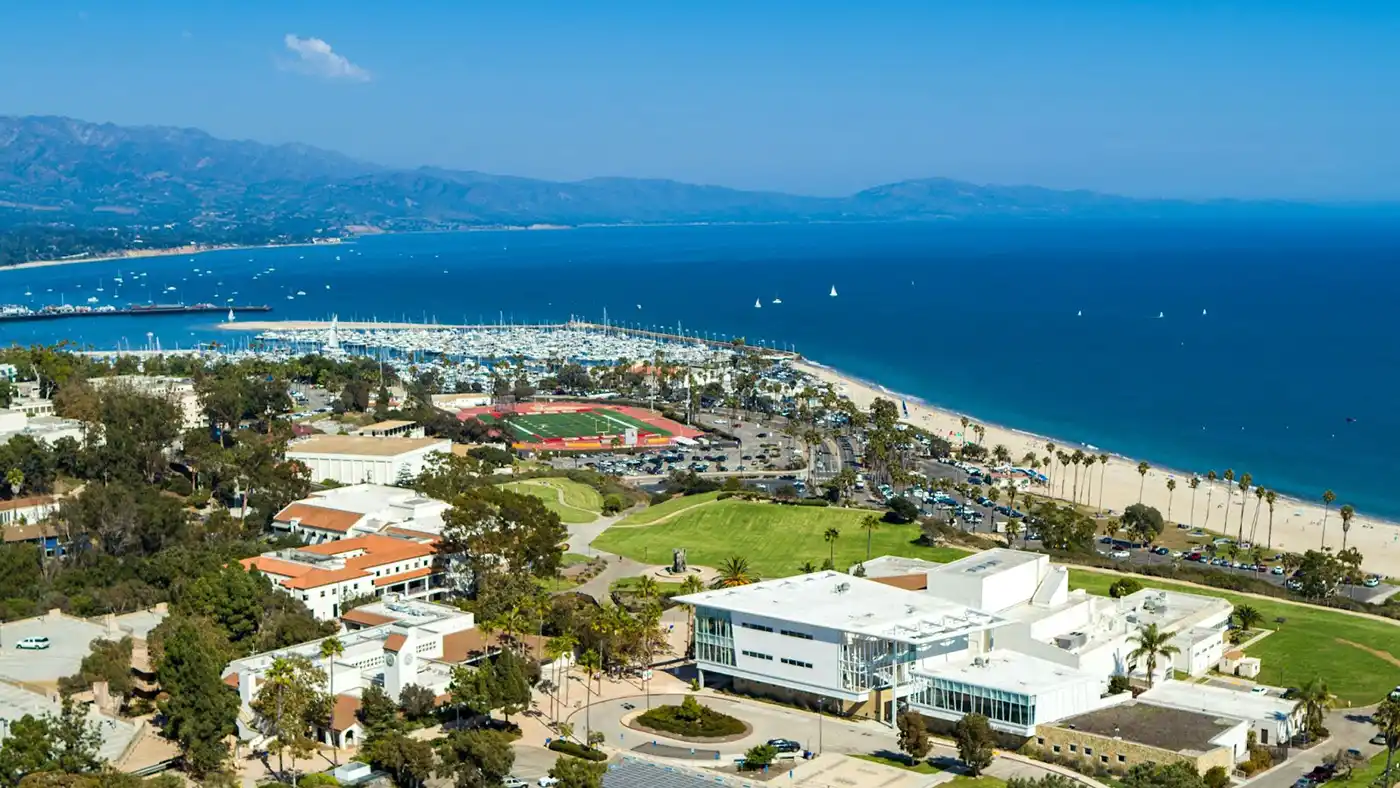
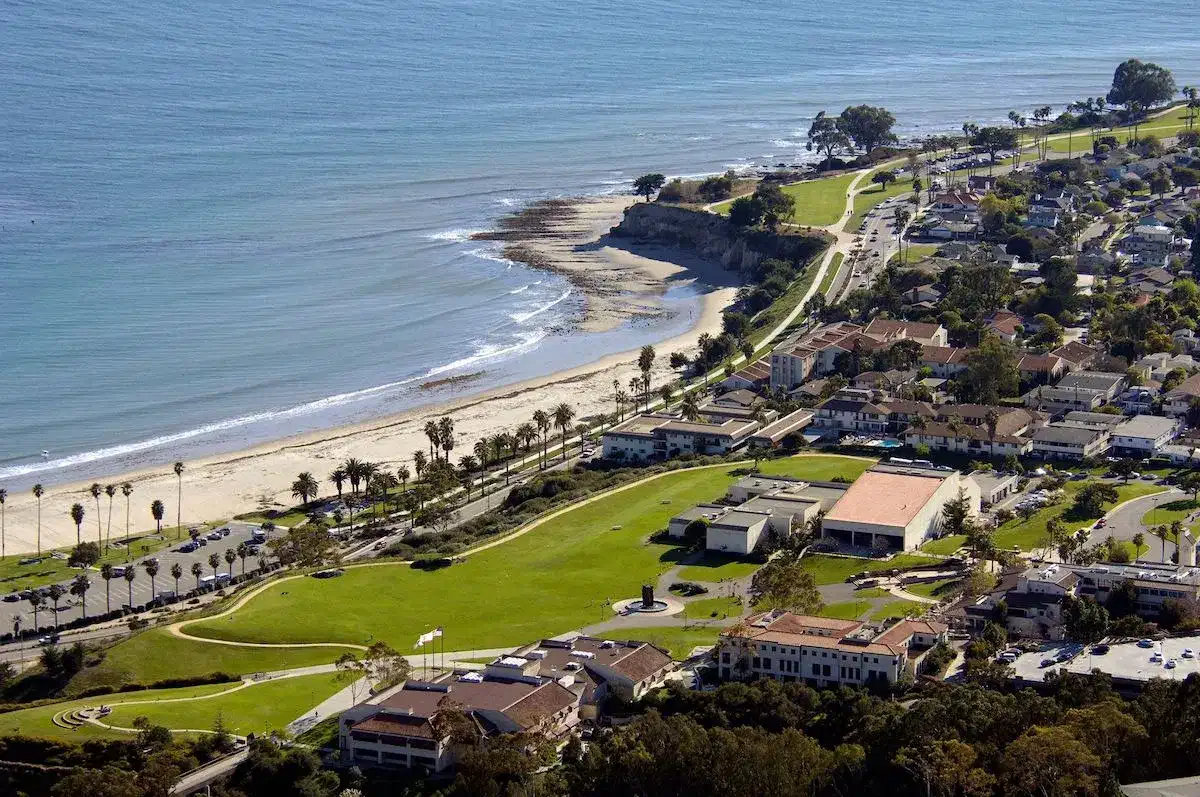
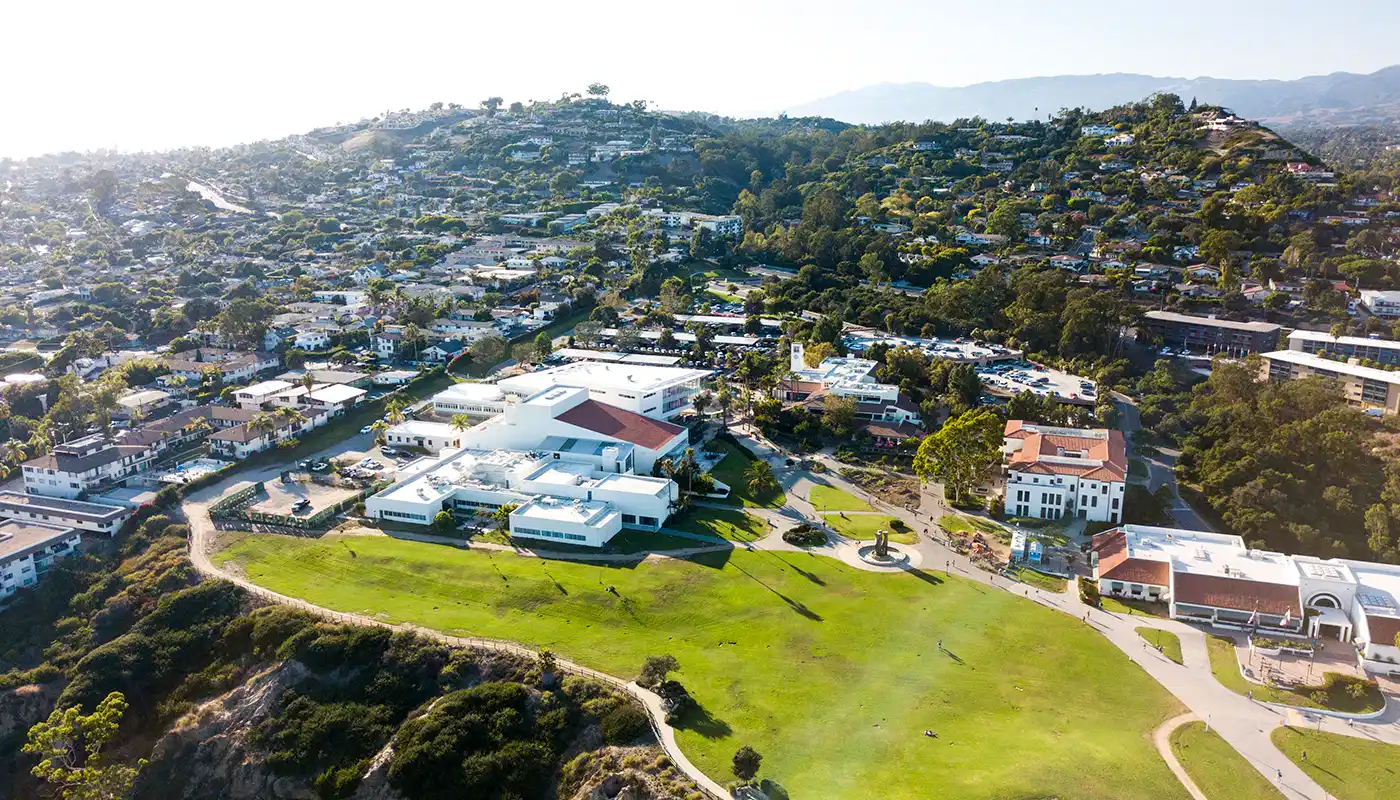
SBCC is at 721 Cliff Drive, Santa Barbara, California 93109. The 74-acre campus sits on a bluff on the Santa Barbara Mesa, overlooking the harbor and the Pacific Ocean, about 100 miles northwest of Los Angeles. It’s one of the most scenic community college campuses in the country, a short drive from downtown Santa Barbara and about 10 miles from UCSB in Goleta.
What SBCC Does Best
SBCC is known for transfer success, its location and several standout programs. The School of Media Arts, the music department, an ASE-certified automotive program and the Marine Diving Technologies program all draw students from beyond the region. SBCC won the 2013 Aspen Prize for Community College Excellence.
The Vaqueros compete in the California Community College Athletic Association, mostly in the Western State Conference, and the school colors are red and white. Notable alumni include musician David Crosby and pitcher Jesse Orosco.
Frequently Asked Questions
Is SBCC hard to get into?
No. Santa Barbara City College has open admission for high school graduates and adults 18 or older, and applying is free. The work is in placement, class planning and registration, not getting accepted.
How much is SBCC per semester?
California residents pay $46 per unit, so a 12-unit semester costs about $552 in enrollment fees plus small mandatory fees. Local high school graduates in the SBCC Promise pay nothing for fees, textbooks or supplies for two years.
Can I transfer from SBCC to UCSB?
Yes. UCSB is the most common destination for SBCC transfers, with 431 SBCC students transferring there in Fall 2022. UCSB participates in the UC Transfer Admission Guarantee (TAG) for eligible students.
What is the SBCC mascot?
SBCC’s teams are the Vaqueros, and the school colors are red and white.
What is the SBCC zip code?
SBCC’s main campus is at 721 Cliff Drive, Santa Barbara, CA 93109.
Is SBCC a Smart First Step?
Santa Barbara City College is open admission, costs California residents $46 per unit and is free for two years for local graduates through the SBCC Promise. Its real value is as a launch pad: hundreds of students transfer to UC Santa Barbara every year, and TAG gives eligible students a guaranteed path.
The one number to plan around is housing. If you can live at home, SBCC is one of the cheapest routes to a UC degree in California. If you’re moving to Santa Barbara, budget for the $41,287 away-from-home cost, file the FAFSA or Dream Act application and look for housing early.
Sources
- Santa Barbara City College. “Current Fees.” sbcc.edu.
- Santa Barbara City College Financial Aid. “2026-2027 Cost of Attendance.” sbcc.edu.
- Santa Barbara City College. “SBCC Promise Expands Access to Higher Education for Over 10,000 Local Students.” June 26, 2026.
- Santa Barbara City College. “First Time College Students.” sbcc.edu.
- SBCC University Transfer Center. “Transfer Statistics.” sbcc.edu.
- UCLA Undergraduate Admission. “Transfer Profile by California Community College, Fall 2025.”
- National Center for Education Statistics. “College Navigator: Santa Barbara City College.”
- Wikipedia. “Santa Barbara City College.” Wikipedia.org.

CalChannel Editorial Team California college guides
The CalChannel editorial team researches and writes guides to California colleges, admissions and financial aid. We build our college profiles and aid guides from colleges’ own published data, federal IPEDS data and the California Student Aid Commission. Read our editorial policy.