
Cal State (CSU) guide · By CalChannel Editorial Team · Updated September 29, 2026
The Cal Poly SLO acceptance rate was 30% for Fall 2025: Cal Poly San Luis Obispo admitted 21,367 of 71,309 first-year applicants, and only about 26% of California applicants, according to its Common Data Set. Nearly two-thirds of enrolled first-years had a 4.0 GPA. For 2026-27, new California students pay $14,682 to $15,720 in tuition and fees, depending on their college.
Cal Poly San Luis Obispo is the Cal State campus that doesn’t behave like most Cal State campuses. It’s far more selective, it charges more in campus fees, and it’s known nationally for engineering, architecture and agriculture. If you’re researching Cal Poly SLO, those three differences matter more than anything else.
Here are the numbers: who gets in, what it costs in 2026-27, how big it is and what “learn by doing” actually means.
| Fact | Cal Poly San Luis Obispo |
|---|---|
| Official name | California Polytechnic State University, San Luis Obispo |
| Type | Public university, California State University system |
| Location | San Luis Obispo, Central Coast of California |
| Founded | 1901 |
| Acceptance rate | 30% (Fall 2025: 21,367 admitted of 71,309 applicants) |
| Acceptance rate, California residents | 26% (Fall 2025: 16,743 of 63,520) |
| High school GPA | 64% of enrolled first-years had a 4.0 (Fall 2025) |
| SAT/ACT | Not used for admission |
| Students | 23,069 total, 22,033 undergraduates (Fall 2024) |
| Tuition and fees, new California students (2026-27) | $15,720 (Engineering, Architecture, Agriculture); $14,682 (other colleges) |
| Cost of attendance, residence hall (2026-27) | $41,342 / $40,304 for residents |
| Retention / graduation rate | 96% / 86% in six years (2018 cohort) |
| Student-to-faculty ratio | 17:1 |
| Athletics | Mustangs, NCAA Division I, Big West Conference |
Sources: Cal Poly Common Data Set 2025-26; Cal Poly Financial Aid, Undergraduate Costs 2026-27; College Navigator (IPEDS). Full list at the end of the article.
In This Article
Cal Poly San Luis Obispo in Brief
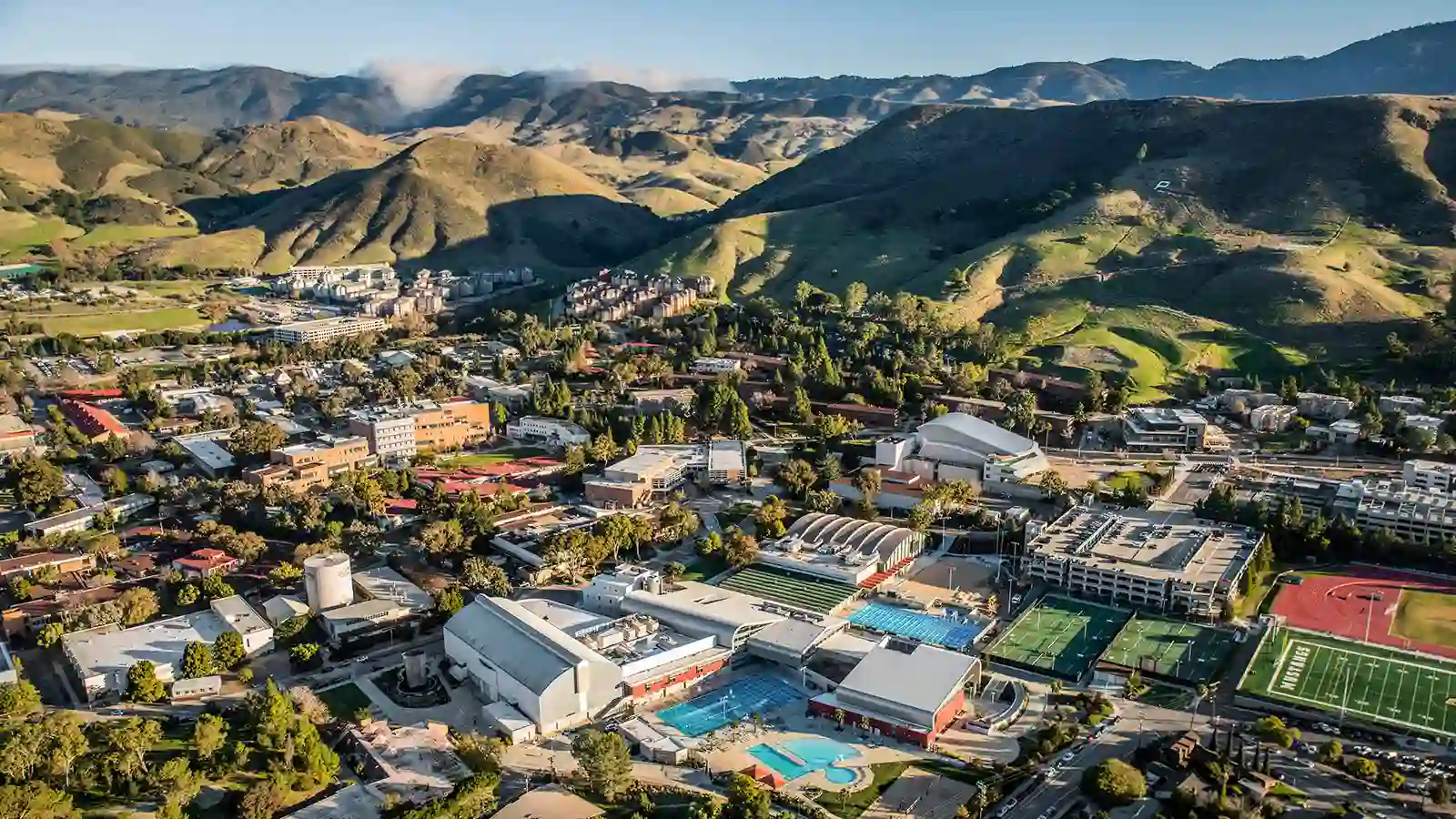
Cal Poly SLO is California Polytechnic State University, San Luis Obispo, a public university founded in 1901. It’s organized into six colleges: Agriculture, Food and Environmental Sciences; Architecture and Environmental Design; Engineering; Liberal Arts; Science and Mathematics; and the Orfalea College of Business.
Its motto, “Learn by Doing,” describes how it teaches: labs, studios, farm and field work and industry projects start early, not just in the final year. That hands-on model is a big reason employers recruit Cal Poly graduates, especially in engineering, architecture and agriculture.
Cal Poly also operates a Solano campus in Vallejo, the former California State University Maritime Academy, which joined Cal Poly and now offers maritime and engineering programs. This guide focuses on the main San Luis Obispo campus.
Is Cal Poly SLO a CSU?
Yes. Cal Poly San Luis Obispo is part of the California State University system, even though “Cal State” isn’t in its name. You apply through Cal State Apply, and CSU rules apply: A-G courses, no SAT or ACT, and base CSU tuition. It is not part of the University of California, and it is a separate school from Cal Poly Pomona, which is also a CSU campus.
What makes it different from most CSU campuses is selectivity and cost. It admits a much smaller share of applicants than a typical Cal State, and it charges a campus fee that brings tuition and fees well above the CSU average.
Cal Poly SLO Acceptance Rate: Campus vs. Major
Cal Poly SLO admitted 30% of first-year applicants for Fall 2025: 71,309 students applied, 21,367 were admitted and 5,456 enrolled, according to its Common Data Set 2025-26. That puts it among the most selective campuses in the CSU; compare San Diego State.
| Fall 2025 first-year applicants | Applied | Admitted | Acceptance rate | Enrolled |
|---|---|---|---|---|
| California residents | 63,520 | 16,743 | 26.4% | 4,368 |
| Out-of-state | 7,109 | 4,413 | 62.1% | 1,055 |
| International | 680 | 211 | 31.0% | 33 |
| All applicants | 71,309 | 21,367 | 30.0% | 5,456 |
Source: Cal Poly San Luis Obispo Common Data Set 2025-26, item C1.
Here’s the part the headline hides: for Californians, Cal Poly is harder to get into than the overall rate suggests. About 26% of California applicants were admitted, compared with 62% of out-of-state applicants, who apply in much smaller numbers and pay much higher nonresident charges. Nearly two-thirds of enrolled first-years reported a 4.0 high school GPA.
How to Get Into Cal Poly SLO
You apply to a specific major at Cal Poly, and competition varies a lot by major. Cal Poly uses a comprehensive review of your academic record rather than a single GPA cutoff. Because you apply to a specific major, the Cal Poly SLO acceptance rate in engineering or business can be far lower than the campus figure.
- Courses: complete the CSU A-G pattern; Cal Poly’s Common Data Set lists 4 years of English and 4 years of math as required, and more rigorous coursework strengthens an application
- GPA: the CSU minimum is 2.5 for residents, but most admitted students present near-4.0 records
- Tests: SAT and ACT scores are not used for admission
- Major: you’re admitted to a major, so choose carefully and check how competitive it is
- How to apply: Cal State Apply, with applications for the following fall submitted in the autumn (the CSU filing period opens October 1)
So what’s the practical takeaway? Treat Cal Poly like a selective university, not a typical Cal State. Take the most demanding math and science courses available, apply to the major you actually want, and add other CSU and UC campuses to your list.
Cal Poly SLO Tuition and Cost of Attendance
For new students starting in Fall 2026, Cal Poly tuition and fees for California residents are $15,720 in the Colleges of Engineering, Architecture and Agriculture and $14,682 in the Colleges of Science and Math, Business and Liberal Arts. That’s well above most Cal State campuses because Cal Poly adds campus-specific fees on top of base CSU tuition.
| Cal Poly SLO cost, 2026-27 (new California residents) | Residence hall | Off campus | With family |
|---|---|---|---|
| Tuition and fees (Engineering, Architecture, Agriculture) | $15,720 | $15,720 | $15,720 |
| Tuition and fees (Science and Math, Business, Liberal Arts) | $14,682 | $14,682 | $14,682 |
| Housing | $12,682 | $14,880 | $4,908 |
| Meals | $7,656 | $7,410 | $7,364 |
| Books and materials | $1,160 | $1,160 | $1,160 |
| Miscellaneous | $2,586 | $2,684 | $4,272 |
| Transportation | $1,466 | $2,218 | $1,884 |
| Loan fees | $72 | $72 | $72 |
| Total (Engineering, Architecture, Agriculture) | $41,342 | $44,144 | $35,380 |
| Total (other colleges) | $40,304 | $43,106 | $34,342 |
Source: Cal Poly Financial Aid, Undergraduate Costs of Attendance 2026-27, San Luis Obispo campus, new students.
Nonresidents pay $471 per unit in nonresident tuition ($14,130 a year at 15 units per semester) plus a nonresident opportunity fee of $8,804, which brings a new out-of-state student’s residence hall budget to $64,276 in the Engineering, Architecture and Agriculture colleges.
Our take: Cal Poly is often grouped with other Cal States as the affordable option, but its tuition and fees for new California students run about $6,000 to $7,000 a year above Cal State Fullerton’s $8,516. That doesn’t make it a bad value; its graduation rates and employer demand are among the best in the CSU. It does mean families should compare full budgets, not assume every CSU costs the same.
Aid still lowers the price for many families. Cal Grant, the Pell Grant and CSU State University Grants apply at Cal Poly, and the Middle Class Scholarship helps families above typical Cal Grant income limits. Run Cal Poly’s net price calculator, and compare the result with other Cal State campuses, such as Cal State Fullerton.

Cal Poly SLO Enrollment and Graduation
Cal Poly had 23,069 students in Fall 2024, including 22,033 undergraduates, according to federal data. It’s a mostly undergraduate campus, and a large share of first-year students live on campus.
Students also finish. About 96% of full-time first-year students return for a second year, 61% of the 2018 entering class graduated in four years, and 86% graduated within six years, which is among the strongest records in the CSU. The student-to-faculty ratio is 17:1.
Living in San Luis Obispo
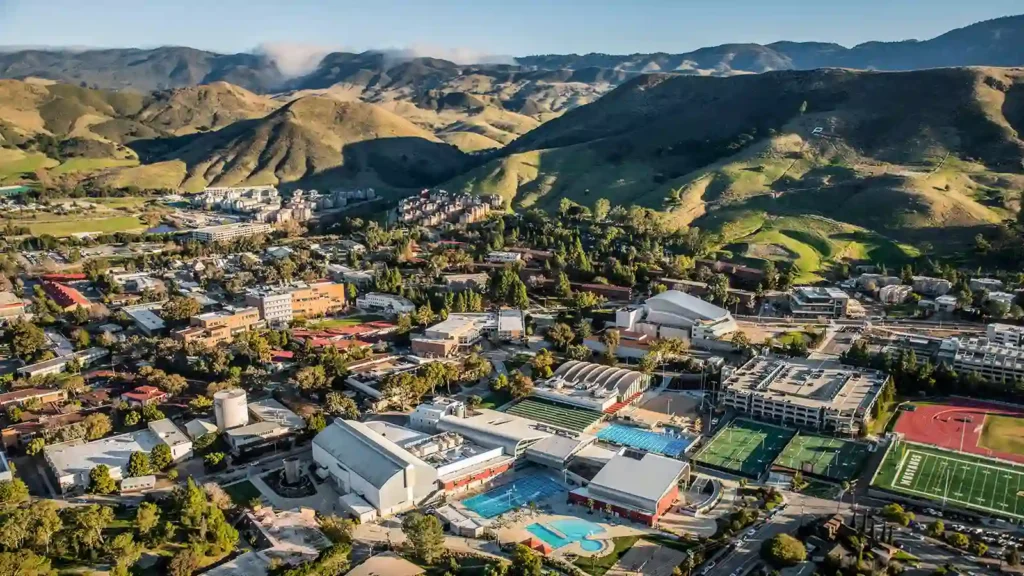
Cal Poly is in San Luis Obispo, a small city on California’s Central Coast, roughly halfway between Los Angeles and San Francisco and a short drive from the Pacific coast. College Navigator classifies the setting as a small suburb, and the university owns thousands of acres of ranch and farmland used for agricultural teaching and research.
The location shapes student life: an outdoorsy, college-town feel, but also a tight housing market. Cal Poly notes that a one-bedroom apartment in San Luis Obispo typically rents for about $2,160 a month, which is why many off-campus students share multi-bedroom apartments.
Majors Cal Poly SLO Is Known For
Cal Poly is best known for engineering, architecture and agriculture, where its Learn by Doing model and industry connections carry national weight. The Orfalea College of Business and programs in computer science, graphic communication and wine and viticulture also draw students from across the state.
The Mustangs compete in NCAA Division I in the Big West Conference. Campus traditions include Open House, a large spring event run by student clubs, and the Cal Poly Universities Rose Float, built by students with Cal Poly Pomona for the Rose Parade.
Frequently Asked Questions
What is the Cal Poly SLO acceptance rate?
Cal Poly SLO admitted 30% of first-year applicants for Fall 2025, or 21,367 of 71,309, according to its Common Data Set. The rate for California residents was about 26%.
Is Cal Poly SLO a Cal State?
Yes. Cal Poly San Luis Obispo is part of the California State University system, so you apply through Cal State Apply and follow CSU admission rules. It is not a UC.
What GPA do you need for Cal Poly SLO?
The CSU minimum is 2.5 for California residents, but Cal Poly is far more competitive: 64% of enrolled first-years for Fall 2025 had a 4.0 high school GPA. Competitiveness also varies by major.
How much is Cal Poly SLO tuition?
For new California students in 2026-27, tuition and fees are $15,720 in Engineering, Architecture and Agriculture and $14,682 in other colleges. A residence hall budget totals about $40,300 to $41,300 a year.
Is Cal Poly SLO the same as Cal Poly Pomona?
No. Both are CSU campuses with “Cal Poly” in the name, but Cal Poly San Luis Obispo and Cal Poly Pomona are separate universities with separate admission decisions.
Does Cal Poly SLO require the SAT or ACT?
No. Like the rest of the CSU, Cal Poly does not use SAT or ACT scores in admission decisions.
Is Cal Poly SLO Worth the Competition?
Cal Poly San Luis Obispo is a CSU campus with UC-level selectivity for Californians: a 30% overall acceptance rate for Fall 2025, about 26% for residents, and a first-year class where nearly two-thirds had a 4.0. It’s known for engineering, architecture and agriculture, and its graduation rates are among the best in the CSU. Compare it with Chico State, CSU Monterey Bay and other Cal State campuses. Plan around the Cal Poly SLO acceptance rate for your specific major, not the campus average.
On cost, plan for $14,682 to $15,720 in tuition and fees for new residents and about $40,000 a year with housing. File the FAFSA or California Dream Act Application, apply to the major you want, and keep other Cal State and UC campuses on your list.
Sources
- Cal Poly Institutional Research. “Common Data Set 2025-26.” calpoly.edu.
- Cal Poly Financial Aid. “Undergraduate Costs of Attendance 2026-27.” calpoly.edu.
- Cal Poly Student Accounts. “2026-27 Registration and Tuition Fees.” calpoly.edu.
- National Center for Education Statistics. “College Navigator: California Polytechnic State University-San Luis Obispo.”
- Wikipedia. “California Polytechnic State University.” Wikipedia.org.

CalChannel Editorial Team California college guides
The CalChannel editorial team researches and writes guides to California colleges, admissions and financial aid. We build our college profiles and aid guides from colleges’ own published data, federal IPEDS data and the California Student Aid Commission. Read our editorial policy.