
Cal State (CSU) guide · By CalChannel Editorial Team · Updated October 6, 2026
CSUN, California State University, Northridge, admitted 92.5% of first-year applicants for Fall 2024, or 30,842 of 33,350, according to its most recent Common Data Set, and enrolled first-years averaged a 3.33 high school GPA. California residents pay $8,328 in tuition and fees for 2026-27, and the on-campus budget is $29,484. CSUN is a Cal State campus in Los Angeles, not a UC or a community college.
CSUN is one of the largest universities in California, yet a lot of people searching for it start with the basics: what does CSUN stand for, is it a UC, is it a community college? Those questions have short answers, and they’re worth getting right before you look at cost and admissions.
A note on the data: CSUN’s most recent Common Data Set covers Fall 2024. CSUN’s website lists it as the 2025-2026 edition, but the admission and enrollment figures inside are for Fall 2024, so that’s how we label them. Costs come from CSUN’s 2026-27 budget.
| Fact | California State University, Northridge |
|---|---|
| What CSUN stands for | California State University, Northridge |
| Type | Public university, California State University (CSU) system |
| Location | Northridge, Los Angeles (San Fernando Valley) |
| Acceptance rate | 92.5% (Fall 2024: 30,842 admitted of 33,350 applicants) |
| Transfer acceptance rate | 72.0% (Fall 2024: 10,027 of 13,924) |
| Average high school GPA | 3.33 (enrolled first-year students, Fall 2024) |
| SAT/ACT | Not required for admission |
| Students | 36,848 total, 32,499 undergraduates (Fall 2024) |
| Tuition and fees, California residents (2026-27) | $8,328 |
| Cost of attendance, on campus (2026-27) | $29,484 |
| Average net price (2023-24) | $7,536 |
| Graduation rate / retention | 57% / 73% (full-time) |
| Student-to-faculty ratio | 25:1 |
| Athletics | Matadors, NCAA Division I |
Sources: CSUN Financial Aid, Cost of Attendance 2026-27; CSUN Common Data Set 2024-25; College Navigator (IPEDS). Full list at the end of the article.
In This Article
- CSUN in Brief: California State University, Northridge
- Is CSUN a UC or a Community College?
- Northridge and the San Fernando Valley
- CSUN Acceptance Rate
- CSUN Cost: Living at Home vs. on Campus
- CSUN Enrollment by the Numbers
- Is CSUN a Good School?
- Film, Deaf Studies and Economic Mobility
- Frequently Asked Questions
CSUN in Brief: California State University, Northridge
CSUN is California State University, Northridge, a public four-year university in Los Angeles and part of the California State University system. It began in 1956 as a satellite campus of Los Angeles State College, became independent in 1958 as San Fernando Valley State College and took its current name in 1972. People also call it Cal State Northridge or CSU Northridge; it’s all the same school.
What Does CSUN Stand For?
CSUN stands for California State University, Northridge. The “C-S-U” is the California State University system, and the “N” is Northridge, the Los Angeles neighborhood where the campus is located. Students usually pronounce it “see-sun.”
Is CSUN a UC or a Community College?
Neither. CSUN is a Cal State (CSU) campus. It is not part of the University of California system, and it is not a community college. California has three public higher education systems: the University of California (UC), the California State University (CSU) and the California Community Colleges. CSUN belongs to the middle one.
The distinction matters in practice. CSU campuses have their own application (Cal State Apply), their own admission rules and lower tuition than UC campuses. CSUN offers bachelor’s and master’s degrees and some doctorates, so unlike a community college you can earn a four-year degree there. Many students also transfer to CSUN from community colleges such as Pasadena City College.
Northridge and the San Fernando Valley
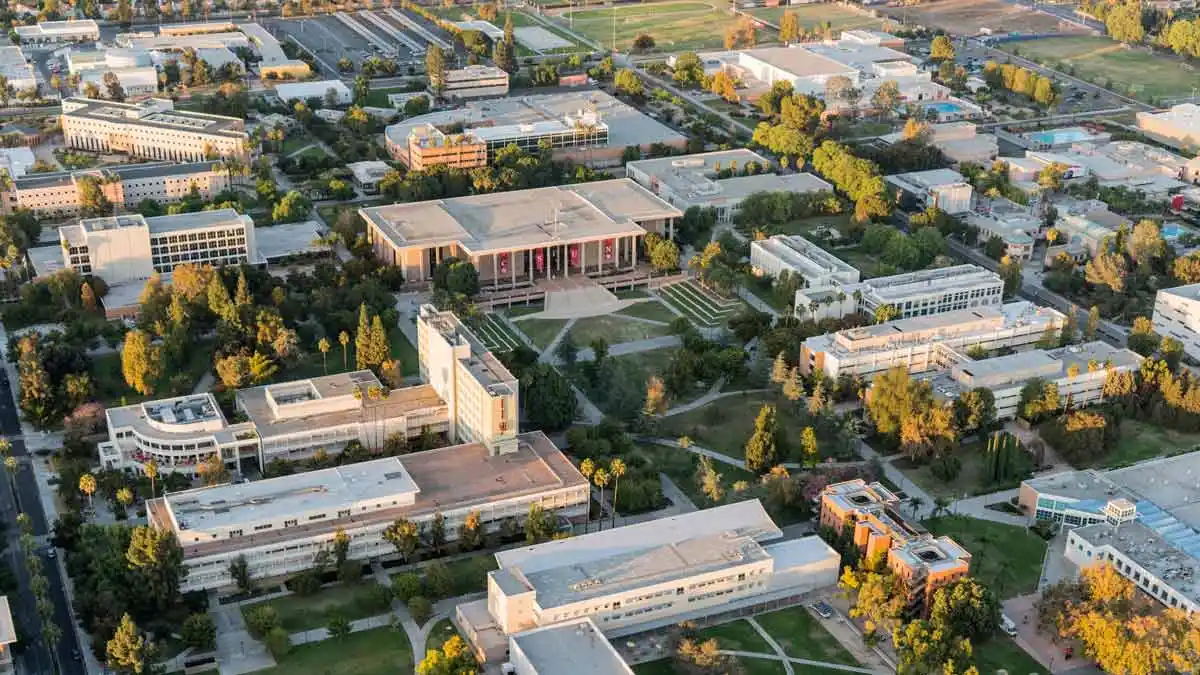
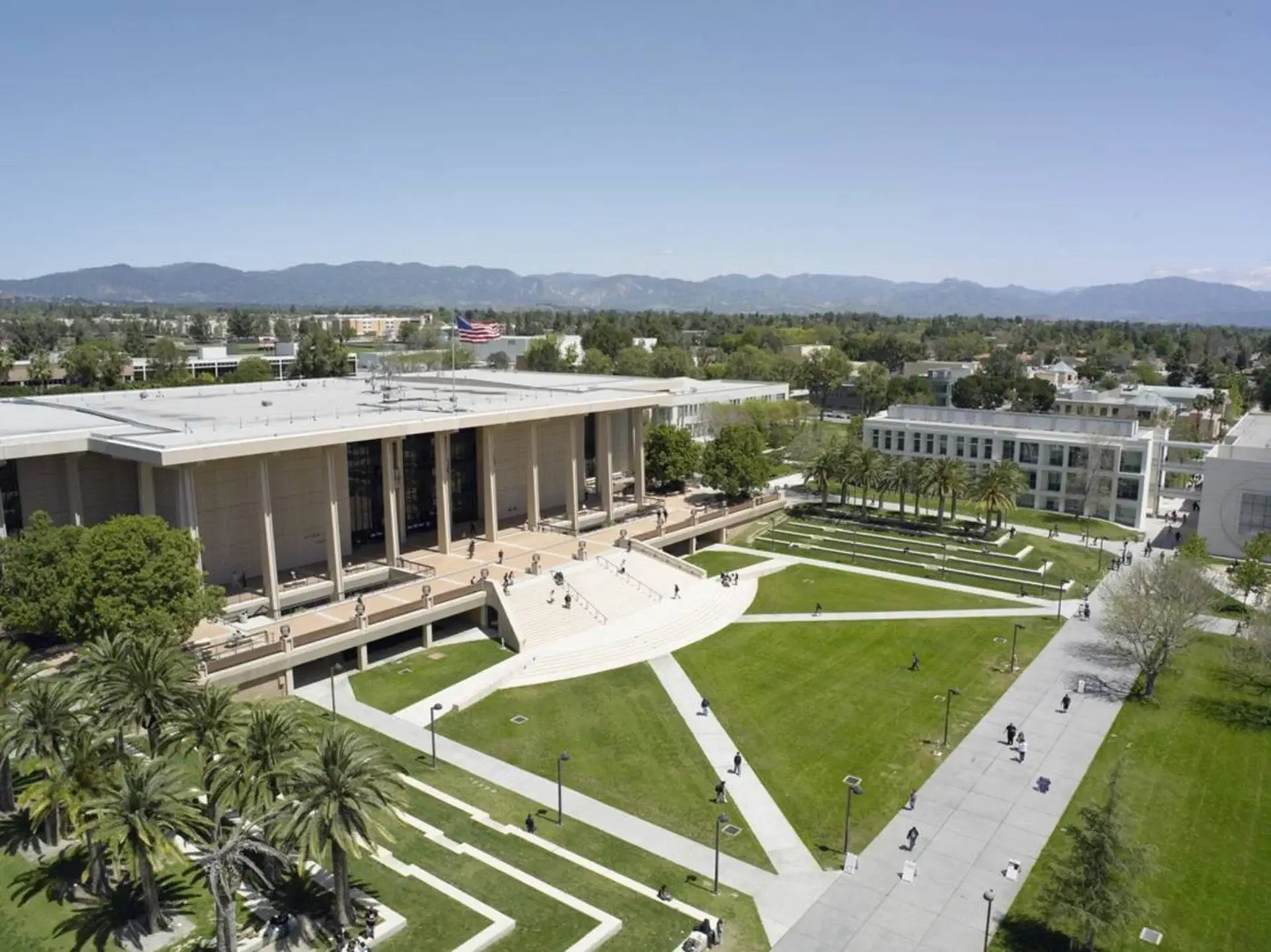
CSUN is in Northridge, a neighborhood in the San Fernando Valley area of the City of Los Angeles, about 20 miles northwest of downtown LA. The campus covers 356 acres. So what city is CSUN in? Los Angeles: Northridge is part of the city, not a separate municipality.
The campus has a notable history. The January 1994 Northridge earthquake caused major damage to CSUN’s buildings, and much of today’s campus was rebuilt or repaired in the years after.
CSUN Acceptance Rate
The CSUN acceptance rate is about 93%: California State University, Northridge admitted 30,842 of 33,350 first-year applicants for Fall 2024, or 92.5%, and enrolled first-years averaged a 3.33 high school GPA, according to CSUN’s Common Data Set. For California students who meet CSU requirements, CSUN is one of the more accessible campuses in Los Angeles.
| CSUN, Fall 2024 | Applied | Admitted | Acceptance rate | Enrolled |
|---|---|---|---|---|
| First-year applicants | 33,350 | 30,842 | 92.5% | 4,655 |
| Transfer applicants | 13,924 | 10,027 | 72.0% | 4,335 |
Source: CSUN Common Data Set (Fall 2024 data), items C1 and D2.
Transfer students are a big part of CSUN: for Fall 2024, nearly as many new transfer students enrolled (4,335) as new first-year students (4,655).
CSUN Admission Requirements
- Courses: complete the CSU’s A-G college preparatory courses
- Eligibility: CSUN uses an eligibility index based on your A-G GPA, with different minimums for California residents and nonresidents
- Tests: SAT and ACT scores are not required for admission; they can help with course placement
- Competitive majors: some majors receive more applicants than seats and set higher eligibility minimums
- Application window for Fall 2027: August 1, 2026 to May 15, 2027 for most majors; Music closes January 15 and Cinema and Television Arts January 31, 2027
- Application fee: $70, with automatic waivers for eligible California residents
CSUN Cost: Living at Home vs. on Campus
CSUN tuition and fees for California residents are $4,164 per semester in 2026-27, or $8,328 for the year. The full cost of attendance ranges from $23,978 for students living with family to $39,918 for students renting off campus. Nonresidents add $471 per unit.
| CSUN cost of attendance, 2026-27 (full year) | With parents | On campus | Off campus |
|---|---|---|---|
| Tuition and fees | $8,328 | $8,328 | $8,328 |
| Books and supplies | $1,438 | $1,438 | $1,438 |
| Housing and food | $9,530 | $15,320 | $23,860 |
| Transportation | $1,808 | $1,466 | $2,514 |
| Personal and miscellaneous | $2,798 | $2,856 | $3,702 |
| Loan fees | $76 | $76 | $76 |
| Total | $23,978 | $29,484 | $39,918 |
Source: CSUN Financial Aid, 2026-2027 Fall and Spring Cost of Attendance.
Notice the gap between living on campus and renting nearby: off-campus housing and food cost about $8,500 more per year. That makes CSUN’s on-campus housing one of the cheaper ways to live independently in Los Angeles.
Our take: For Los Angeles students, CSUN’s biggest cost advantage is the option to live at home. Tuition is roughly the same across Cal State campuses, but the difference between a $23,978 budget with family and a $39,918 budget renting off campus is almost $16,000 a year. Over four years, that choice matters more than any tuition gap between CSU campuses.
Most students also receive help. CSUN’s average net price for first-time, full-time students receiving grant aid was $7,536 in 2023-24, according to College Navigator, and full-time undergraduates with financial need received an average aid package of $13,747 in 2024-25, according to the Common Data Set. Cal Grant, the Pell Grant and the CSU’s State University Grant can cover tuition for eligible Californians. For comparison, San Diego State lists a $36,432 on-campus budget for 2026-27, about $7,000 more than CSUN’s.
CSUN Enrollment by the Numbers
CSUN had 36,848 students in Fall 2024, including 32,499 undergraduates and 4,349 graduate students, according to its Common Data Set. That makes it one of the largest universities in California and one of the biggest campuses in the CSU system.
Size brings range. CSUN offers a wide catalog of majors, a Division I athletics program and a diverse student body; it ranks among the top universities in the country for bachelor’s degrees awarded to Hispanic and Latino students. The student-to-faculty ratio is 25:1, so expect larger introductory classes.

Is CSUN a Good School?
Yes, especially for value and social mobility. The Wall Street Journal and College Pulse ranked CSUN No. 8 in the nation for social mobility in September 2025, and Washington Monthly named it No. 1 Best College for Your Tuition Dollars in the West in 2026. The New York Times ranked it No. 1 among public colleges for the economic diversity of its students in 2023.
Outcomes are about average for a large public university: 73% of full-time first-year students return for a second year, and the overall graduation rate is 57%, according to federal data. Students who want a smaller, more selective experience may look elsewhere, but for Los Angeles students seeking an affordable four-year degree close to home, CSUN offers a lot for the price.
Film, Deaf Studies and Economic Mobility
CSUN is known for three things: film and media, services for deaf and hard of hearing students, and economic mobility.
Its cinema and television arts program ranked No. 20 among the 25 best U.S. film schools in The Hollywood Reporter’s July 2026 list, the top film program in the Cal State system, and its music program ranked No. 12 among the best music schools in the world in The Hollywood Reporter in 2025. That fits a campus in the San Fernando Valley, close to Los Angeles’ film and TV industry.
CSUN is also home to the National Center on Deafness (NCOD), established in 1964 as the first postsecondary program in the nation to provide paid sign language interpreters for deaf students. CSUN reports the largest enrollment of deaf and hard of hearing students among mainstream U.S. universities, and NCOD serves about 150 of them each semester with interpreting, captioning, notetaking and tutoring.
The athletic teams are the Matadors, and the school colors are red and black. If you’re comparing Los Angeles-area Cal State options, see our guides to Cal State Long Beach and Cal State Fullerton.
Frequently Asked Questions
What does CSUN stand for?
CSUN stands for California State University, Northridge. It’s a Cal State campus in the Northridge neighborhood of Los Angeles.
What is the CSUN acceptance rate?
CSUN admitted 92.5% of first-year applicants for Fall 2024, or 30,842 of 33,350. Enrolled first-years averaged a 3.33 high school GPA, and SAT or ACT scores are not required.
Is CSUN a community college?
No. CSUN is a four-year public university in the California State University system. It awards bachelor’s and master’s degrees, and many community college students transfer there.
Is CSUN a UC school?
No. CSUN is part of the California State University (CSU) system, not the University of California (UC). The two systems have separate applications, admission standards and tuition.
Is CSUN a good school?
Yes, especially for affordability and social mobility. CSUN ranked No. 8 nationally for social mobility (WSJ/College Pulse, 2025) and has a top-ranked film program, though its 57% graduation rate is about average for a large public university.
How many students go to CSUN?
CSUN had 36,848 students in Fall 2024, including 32,499 undergraduates, making it one of the largest universities in California.
What city is CSUN in?
CSUN is in Los Angeles, in the Northridge neighborhood of the San Fernando Valley, about 20 miles northwest of downtown LA.
Who Should Apply to CSUN?
CSUN is California State University, Northridge: a large public Cal State campus in Los Angeles, not a UC and not a community college. It admits about 93% of applicants, charges California residents $8,328 in tuition and fees for 2026-27 and ranks among the best in the country for social mobility and value. Compare CSUN with CSU Dominguez Hills, Cal State Long Beach and other Cal State campuses.
For Los Angeles students, the smartest cost move is often living at home, which keeps the full budget near $24,000 a year. File the FAFSA or California Dream Act Application, check Cal Grant eligibility and compare CSUN’s net cost with other Cal State and UC offers before deciding.
Sources
- CSUN Financial Aid. “2026-2027 Fall and Spring Cost of Attendance.” csun.edu.
- CSUN Institutional Research. “Common Data Set 2024-2025.” csun.edu.
- National Center for Education Statistics. “College Navigator: California State University-Northridge.”
- CSUN Admissions. “First-Time Freshman Admissions.” csun.edu.
- CSUN. “CSUN Rankings and Pride Points.” csun.edu.
- CSUN National Center on Deafness. “About Us.” csun.edu.
- Wikipedia. “California State University, Northridge.” Wikipedia.org.

CalChannel Editorial Team California college guides
The CalChannel editorial team researches and writes guides to California colleges, admissions and financial aid. We build our college profiles and aid guides from colleges’ own published data, federal IPEDS data and the California Student Aid Commission. Read our editorial policy.