Cal State (CSU) guide · By CalChannel Editorial Team · Updated October 6, 2026
The CSULB acceptance rate was 45.4% for Fall 2025: California State University, Long Beach admitted 40,105 of 88,276 first-year applicants, according to its Common Data Set, making it one of the more selective campuses in the Cal State system. It’s a public university, not a UC, with 40,057 students in Fall 2025. Tuition and mandatory fees for California residents are $8,748 for 2026-27, and the full on-campus cost of attendance is $34,462. CSULB ranks No. 3 among national universities for social mobility in U.S. News 2026. This guide covers the CSULB acceptance rate, local admission, cost, graduation rate and majors.
California State University, Long Beach goes by a lot of names: CSULB, Cal State Long Beach, CSU Long Beach, Long Beach State or simply “The Beach.” Whatever you call it, it’s one of the most applied-to universities in the country, and its admission odds depend heavily on where you went to high school.
This guide uses CSULB’s Common Data Set 2025-26 for admission, enrollment and graduation figures and its 2026-27 student budget for costs, so every number below comes from the university itself unless we say otherwise.
| Fact | California State University, Long Beach |
|---|---|
| Type | Public university (R2), California State University system |
| Location | 1250 Bellflower Blvd., Long Beach, California |
| Founded | 1949 |
| Acceptance rate | 45.4% (Fall 2025: 40,105 admitted of 88,276 applicants) |
| Transfer acceptance rate | 50.2% (Fall 2025: 13,204 of 26,319) |
| Minimum GPA (CSU) | 2.5 California residents; 3.0 nonresidents |
| SAT/ACT | Not used for admission (test blind) |
| Students | 40,057 total, 36,056 undergraduates (Fall 2025) |
| Tuition and mandatory fees, California residents (2026-27) | $8,748 |
| Cost of attendance, on campus (2026-27) | $34,462 |
| Graduation rate / retention | 70% (6-year, 2019 cohort) / 88% |
| U.S. News 2026 | #3 Social Mobility, national universities |
Sources: CSULB Admissions, CSULB Financial Aid, CSULB Common Data Set 2025-26, CSULB News and College Navigator. Full list at the end of the article.
In This Article
What Is CSULB?
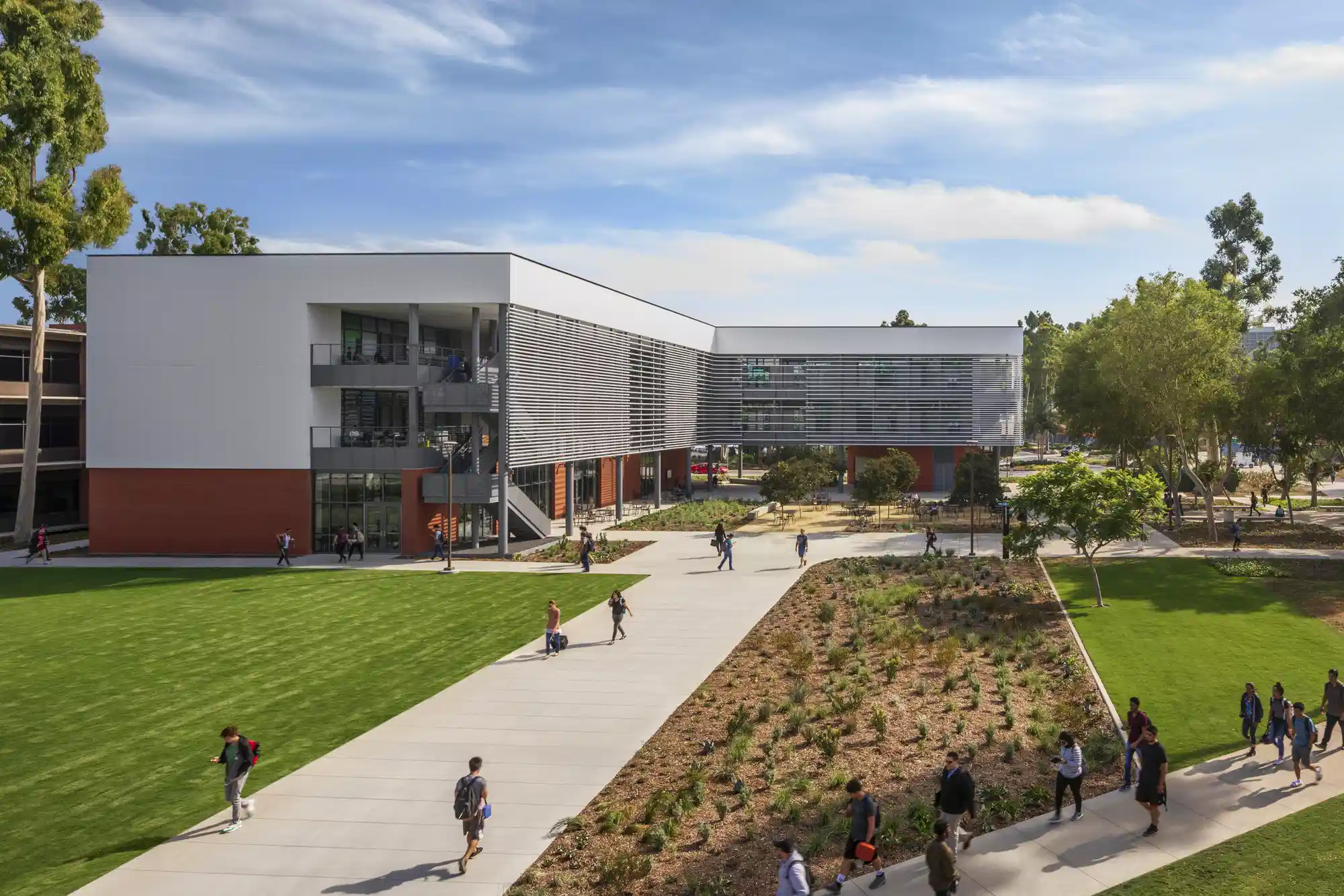
CSULB is California State University, Long Beach, a public research university (R2) and one of the 23 campuses of the California State University system. It was founded in 1949 and sits on a 323-acre campus in Long Beach, about 3 miles from the Pacific Ocean. It’s also a federally designated Hispanic-Serving Institution.
CSULB is not part of the University of California system. That matters for three reasons: it uses the Cal State application, follows CSU admission rules and charges CSU tuition, which is far lower than UC tuition for California residents.
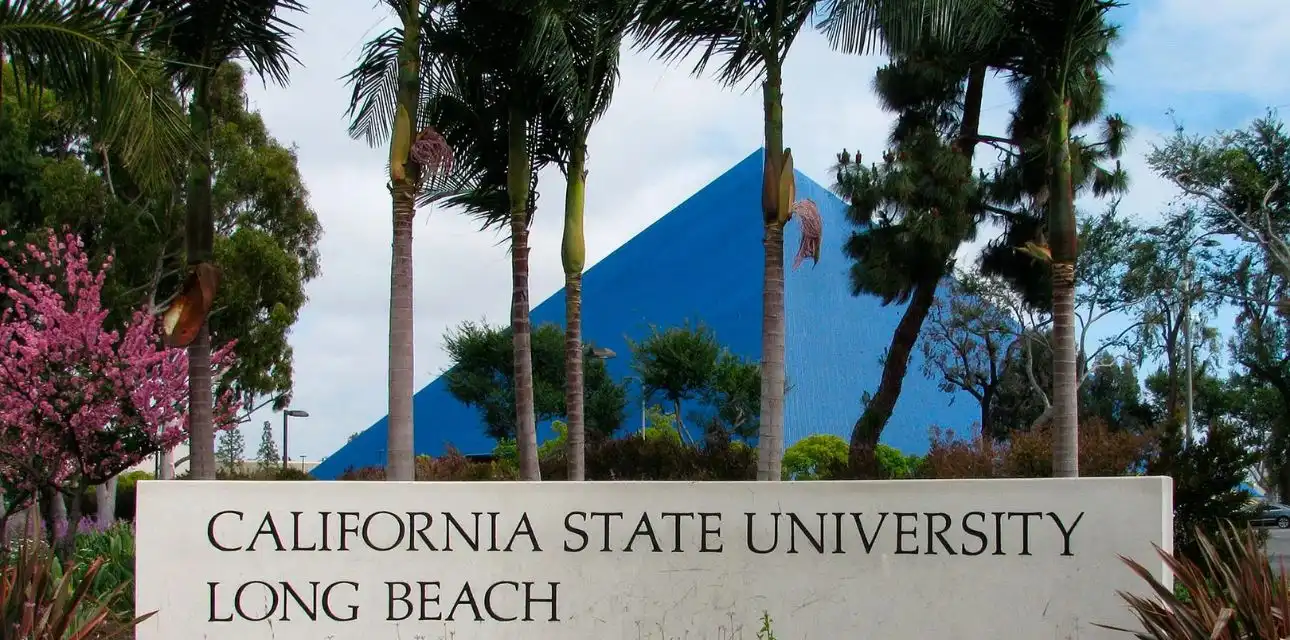
The campus is easy to recognize. Its blue pyramid arena (now the LBS Financial Credit Union Pyramid) is one of the most distinctive buildings in California higher education, and the Earl Burns Miller Japanese Garden is a quiet landmark on campus. The athletic teams compete in NCAA Division I in the Big West Conference and are branded “The Beach,” with a shark mascot, Elbee, adopted in 2020. School colors are black and gold.
What Is the CSULB Acceptance Rate?
The CSULB acceptance rate is 45.4%: Cal State Long Beach admitted 40,105 of 88,276 first-year applicants for Fall 2025, and 5,884 enrolled, according to its Common Data Set 2025-26. That makes CSULB one of the more selective Cal State campuses, alongside San Diego State and Cal Poly San Luis Obispo.
| CSULB, Fall 2025 | Applied | Admitted | Acceptance rate | Enrolled |
|---|---|---|---|---|
| First-year applicants | 88,276 | 40,105 | 45.4% | 5,884 |
| Transfer applicants | 26,319 | 13,204 | 50.2% | 4,407 |
Source: CSULB Common Data Set 2025-26, items C1 and D2.
Transfer applicants had slightly better odds than first-years: half of them were admitted for Fall 2025. Enrolled first-years averaged a 3.66 high school GPA, and with more than 88,000 first-year applications, CSULB remains one of the most applied-to universities in the country.
What Does CSULB Admissions Look For?
CSULB admits first-year students by major, and local applicants get priority. You need to meet CSU minimums, but because CSULB receives far more qualified applicants than it can admit, most applicants are ranked by a CSULB eligibility index, with admission based on space available. Local applicants and students in less crowded majors usually face better odds than the overall CSULB acceptance rate suggests.
- Courses: complete the A-G college preparatory pattern with grades of C or better
- GPA: 2.5 minimum for California residents, 3.0 for nonresidents
- CSULB eligibility index: 3,200 minimum for non-STEM majors (California residents; 3,500 for nonresidents) and 3,600 for STEM majors
- Tests: SAT and ACT scores are not used for admission
- Local preference: applicants from designated local high schools (and military applicants) receive priority if eligible
- Filing period: October 1 through December 1 for the following fall
How Local Admission Works at CSULB
Local preference is the single biggest factor after meeting minimums. Graduates of local districts such as Long Beach Unified, ABC Unified, Downey Unified, Compton Unified and Huntington Beach schools, plus some local private schools, qualify. A local first-year applicant who meets CSULB’s minimum eligibility but isn’t admissible to their chosen major is offered admission as an undeclared student, a meaningful safety net.
Transfers get a similar benefit. Since Fall 2025, students who completed most of their units at Long Beach City College, Cerritos College, Golden West College, Coastline Community College or Orange Coast College count as local. Local CSU-eligible transfers are guaranteed admission if they meet the major’s minimum GPA and preparation, except in highly impacted majors.
What Does CSULB Cost?
Cal State Long Beach tuition for California residents is $6,838 for 2026-27, plus $1,910 in mandatory fees, for a total of $8,748. The full cost of attendance ranges from $28,860 for students living at home to $42,476 for students renting off campus. Nonresidents pay an additional $12,246 in nonresident tuition.
| CSULB cost of attendance, 2026-27 (California residents) | Living at home | On campus | Off campus |
|---|---|---|---|
| Tuition | $6,838 | $6,838 | $6,838 |
| Mandatory fees | $1,910 | $1,910 | $1,910 |
| Housing | $4,652 | $12,034 | $16,676 |
| Food | $7,884 | $6,520 | $7,884 |
| Books, course materials and supplies | $1,806 | $1,806 | $1,806 |
| Transportation | $1,206 | $1,386 | $1,656 |
| Personal expenses | $4,564 | $3,968 | $5,706 |
| Total | $28,860 | $34,462 | $42,476 |
Source: CSULB Financial Aid and Scholarships, Undergraduate Costs 2026-2027.
Most students pay much less than those totals. CSULB’s average net price for first-time, full-time students receiving grant aid was $10,607 in 2023-24. Cal Grant, Pell and the CSU’s State University Grant can cover tuition for eligible Californians.
Our take: Long Beach State is one of the clearest value cases in California. Tuition and fees are under $9,000, the average net price for aided students is around $10,600, and it ranks No. 3 nationally for social mobility. The real budget question is housing: renting near campus adds about $8,000 a year over living on campus, and more than $13,000 over living at home.
Is CSULB Cheaper Than a UC?
Yes, for tuition. CSU basic tuition is $6,838 for 2026-27 at every campus, including CSULB, San Diego State, CSUN and CSU Monterey Bay, while UC tuition for California residents is much higher. The total budget still depends mostly on housing: CSULB’s $34,462 on-campus budget sits between CSUN’s $29,484 and SDSU’s $36,432.
Is CSULB a Commuter School?
Largely, yes. In Fall 2025, 3,013 students moved into CSULB’s three residential villages (Hillside, Parkside and Beachside), out of 36,056 undergraduates. That means fewer than one in ten undergraduates live in campus housing, and most students live at home or rent nearby.
That doesn’t mean campus is empty. CSULB draws heavily from Los Angeles and Orange counties, so many students commute short distances and stay on campus between classes. But if you want a traditional residential college experience, expect a smaller residential community than the size of the university suggests, and apply for housing early.
CSULB Ranking and Graduation Rate
CSULB ranks No. 3 among national universities for social mobility in the U.S. News 2026 Best Colleges, the same position as the year before. The Wall Street Journal ranked it No. 43 among U.S. colleges in its 2026 list, up from No. 67. Washington Monthly placed it No. 9 for “Best Colleges for Your Tuition Dollars” and No. 4 for “Best Bang for the Buck: West.”
Outcomes are strong for a large public university: 88% of full-time first-year students who entered in Fall 2024 returned for a second year, and 70% of the 2019 entering class graduated within six years, according to CSULB’s Common Data Set. The student-to-faculty ratio is 27:1.
So is CSULB harder to get into than other Cal State campuses? Yes, for most applicants. For Fall 2025, CSULB admitted 45.4% of first-year applicants, compared with 37.4% at San Diego State and 30.0% at Cal Poly SLO; CSUN admitted 92.5% for Fall 2024 and CSU Monterey Bay about 97%.
What Majors Does CSULB Offer?
CSULB offers bachelor’s and master’s degrees, plus several doctorates, across colleges including the Arts, Business, Education, Engineering, Health and Human Services, Liberal Arts, and Natural Sciences and Mathematics. Admission is by major, and some majors are more competitive than others: STEM majors require a higher eligibility index (3,600) than non-STEM majors (3,200 for California residents).
Notable alumni reflect that range, from filmmaker Steven Spielberg and Oscar-winning screenwriter Linda Woolverton to three-time Olympic volleyball gold medalist Misty May-Treanor and Grammy-winning duo the Carpenters.
If you’re comparing Southern California options, see our guides to Loyola Marymount University and California Baptist University, two private alternatives with very different price points.
Frequently Asked Questions
Is CSULB a commuter school?
Mostly. About 3,000 students lived in CSULB residence halls in Fall 2025, out of about 36,000 undergraduates, so most students commute or rent near campus.
Is CSULB hard to get into?
It’s moderately selective. CSULB admitted 45.4% of first-year applicants for Fall 2025. Local applicants from designated high schools get priority, while others are ranked by an eligibility index by major.
Is CSULB a UC school?
No. CSULB is part of the California State University (CSU) system. UC campuses are a separate system with a separate application and higher tuition.
Is CSULB harder to get into than other Cal State campuses?
Yes, for most students. CSULB’s 45.4% rate for Fall 2025 was far below CSUN’s 92.5% or CSU Monterey Bay’s 97% (both Fall 2024), though San Diego State (37.4%) and Cal Poly SLO (30.0%) were more selective.
How much is CSULB tuition per year?
For 2026-27, California residents pay $6,838 in tuition plus $1,910 in mandatory fees, or $8,748 a year. Nonresidents add $12,246 in nonresident tuition.
Does CSULB’s lower cost mean a lower-quality education?
No. CSULB has an 88% retention rate, a 70% six-year graduation rate, R2 research status and a No. 3 national ranking for social mobility. Its lower price reflects state funding for CSU campuses, not lower academic standards.
The Bottom Line on CSULB
Cal State Long Beach admits about 45% of first-year applicants, gives real priority to local students and charges California residents $8,748 in tuition and fees for 2026-27. With a 70% graduation rate and a No. 3 national ranking for social mobility, it’s one of the strongest values in the Cal State system. Compare CSULB with Cal State Dominguez Hills, Cal State Fullerton and other Cal State campuses. Check how the CSULB acceptance rate applies to your major and to the local admission area before you apply.
Plan around two things. First, admission: if you’re not a local applicant, treat CSULB as a selective school and choose your major carefully. Second, housing: most students commute, and the difference between living at home ($28,860) and renting off campus ($42,476) is larger than the entire tuition bill.
Sources
- CSULB Financial Aid and Scholarships. “Undergraduate Costs, 2026-2027.” csulb.edu.
- CSULB Admissions. “First-Time, First-Year Student Admission Eligibility.” csulb.edu.
- CSULB Admissions. “Local Preference Admission Consideration.” csulb.edu.
- CSULB News. “CSULB Ranks No. 3 Among National Universities for Promoting Social Mobility.” September 23, 2025.
- CSULB News. “Wall Street Journal Ranking Places CSULB in the Top 50 of U.S. Institutions.” September 30, 2025.
- CSULB News. “3,000 Students and Countless Hugs Later, Residence Halls Come Alive for Fall.” August 2025.
- CSULB Institutional Research and Analytics. “Common Data Set 2025-2026.” csulb.edu.
- National Center for Education Statistics. “College Navigator: California State University-Long Beach.”
- Wikipedia. “California State University, Long Beach.” Wikipedia.org.

CalChannel Editorial Team California college guides
The CalChannel editorial team researches and writes guides to California colleges, admissions and financial aid. We build our college profiles and aid guides from colleges’ own published data, federal IPEDS data and the California Student Aid Commission. Read our editorial policy.