
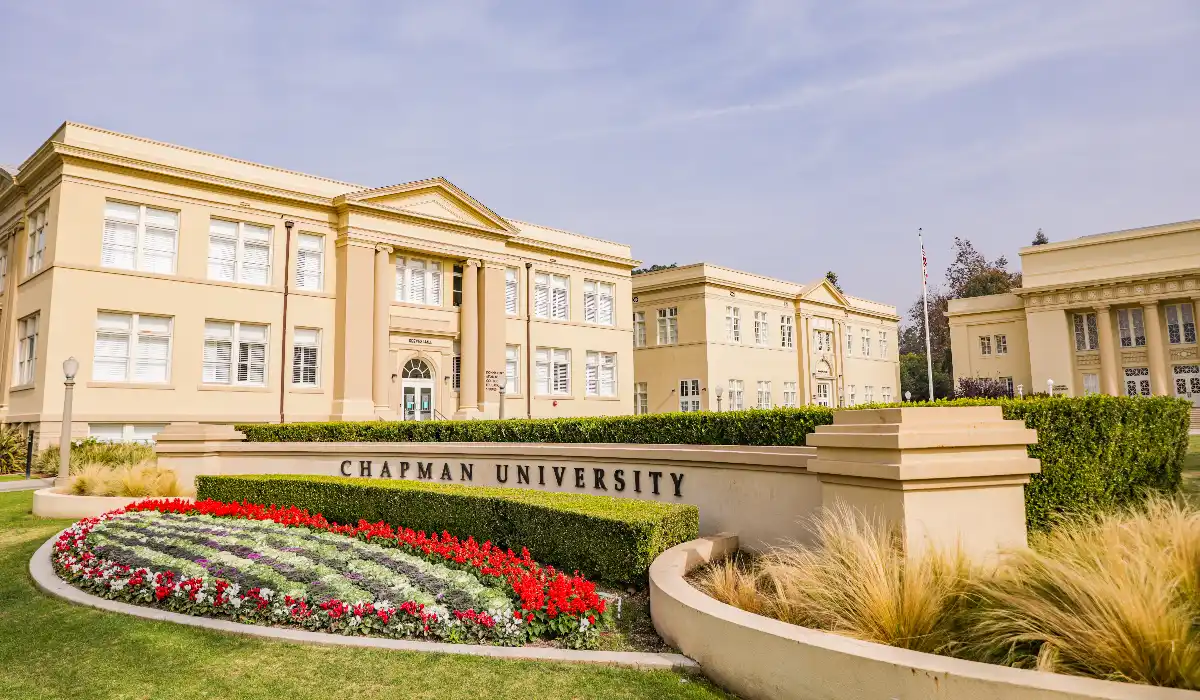
Private colleges in California · By CalChannel Editorial Team · Updated October 5, 2026
The Chapman University acceptance rate was 72.1% for Fall 2025: Chapman admitted 10,642 of 14,769 first-year applicants, according to its Common Data Set. Chapman is a private university in Orange, in Orange County, best known for its Dodge College of Film and Media Arts. Its 2026-27 tuition is $69,990, and the cost of attendance for a first-year student living on campus is $94,376.
Chapman University is a mid-sized private university with a residential undergraduate campus in the historic city of Orange, about 30 miles southeast of downtown Los Angeles. It’s known nationally for film, business, communication and the performing arts.
Chapman’s overall admit rate looks generous, but it hides big differences between programs and admission rounds. This guide uses Chapman’s own 2025-26 Common Data Set and its 2026-27 budgets to show where it’s easy to get in, where it isn’t, and what you’ll actually pay.
| Fact | Chapman University |
|---|---|
| Type | Private university, historically affiliated with the Christian Church (Disciples of Christ) |
| Location | Orange, Orange County |
| Founded | 1861 |
| Acceptance rate | 72.1% (Fall 2025: 10,642 admitted of 14,769 applicants) |
| Transfer acceptance rate | 61.0% (Fall 2025: 818 of 1,340) |
| SAT/ACT | Test-optional; middle 50% SAT 1255-1420, ACT 28-32 for those who submitted |
| Undergraduates | About 7,600 (Fall 2025) |
| Tuition (2026-27) | $69,990 |
| Cost of attendance, first-year on campus | $94,376 |
| Retention / graduation rate | 91% / 83% in six years (2019 cohort) |
| Student-to-faculty ratio | 12:1 |
| Athletics | Panthers, NCAA Division III, SCIAC |
Sources: Chapman University Common Data Set 2025-26; Chapman Financial Aid, Undergraduate Cost of Attendance. Full list at the end of the article.
In This Article
- Chapman University: Private, Mid-Sized, Film-Focused
- Chapman Acceptance Rate: 72% Overall, Lower by Program
- Applying to Chapman, Dodge Film School Included
- Chapman Cost and Net Price by Income
- Chapman Enrollment and Graduation Rates
- Old Towne Orange and the Irvine Campus
- Beyond Film: What Else Chapman Is Known For
- Frequently Asked Questions
Chapman University: Private, Mid-Sized, Film-Focused
Chapman University is a private university founded in 1861 and located in Orange, California. It’s organized into colleges that include the Dodge College of Film and Media Arts, the Argyros College of Business and Economics, Wilkinson College of Arts, Humanities, and Social Sciences, the College of Performing Arts, the Schmid College of Science and Technology, the Crean College of Health and Behavioral Sciences and the Fowler School of Engineering, along with schools of law, pharmacy and education.
Is Chapman religious? It has a historic covenant relationship with the Christian Church (Disciples of Christ), but students don’t need to be Christian or religious to attend. Chapman welcomes students of all faiths and backgrounds, and its Fish Interfaith Center serves many traditions. The official website is chapman.edu.
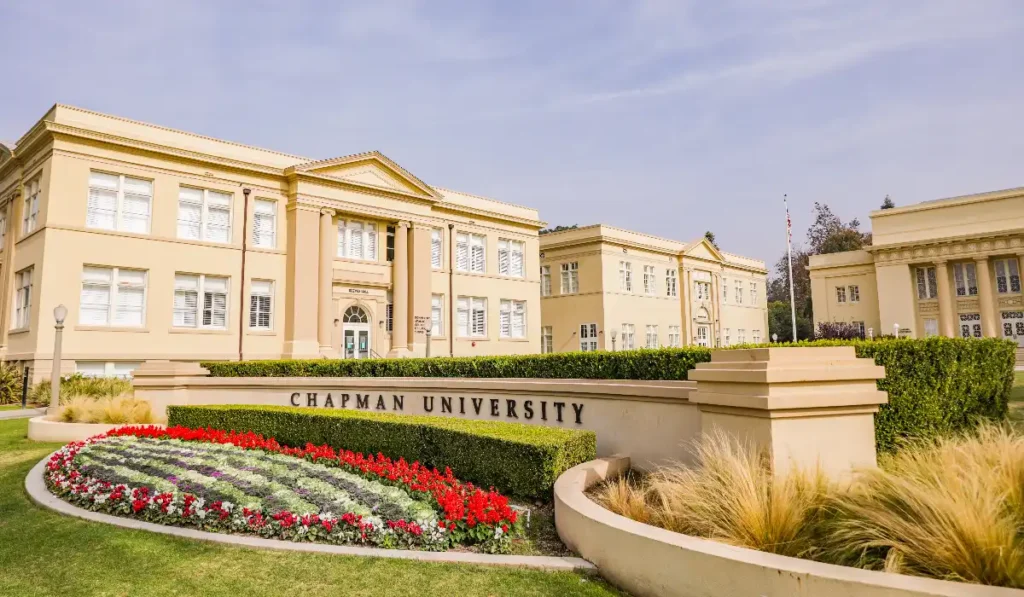
Chapman Acceptance Rate: 72% Overall, Lower by Program
For Fall 2025, 14,769 students applied to Chapman, 10,642 were admitted and 1,727 enrolled, according to its Common Data Set 2025-26.
| Chapman, Fall 2025 | Applied | Admitted | Acceptance rate | Enrolled |
|---|---|---|---|---|
| First-year applicants | 14,769 | 10,642 | 72.1% | 1,727 |
| Transfer applicants | 1,340 | 818 | 61.0% | 300 |
Source: Chapman University Common Data Set 2025-26, items C1 and D2.
Admission to some programs, especially film production and the performing arts at Dodge College and the College of Performing Arts, is more selective than the university average and may require portfolios or auditions. Chapman’s waitlist is modest: for Fall 2025, 764 students accepted a waitlist spot and 246 were admitted from it.
Applying to Chapman, Dodge Film School Included
Chapman uses a holistic review of grades, course rigor, essays, recommendations and activities. Film and media applicants should know the overall Chapman University acceptance rate does not reflect how competitive Dodge College can be.
- Application: the Common Application with Chapman’s supplemental questions
- Testing: test-optional; scores are considered if submitted, and 16% of enrolled first-years submitted SAT scores and 6% submitted ACT scores
- Scores, if you send them: the middle 50% of Fall 2025 submitters scored 1255-1420 on the SAT and 28-32 on the ACT
- Early rounds: Early Decision and Early Action deadlines are November 1, with decisions around December 20
- Programs: film, dance, music and theatre applicants submit creative materials or audition
Is Early Decision Easier at Chapman?
Not on the numbers. For Fall 2025, Chapman received 282 Early Decision applications and admitted 145, about 51%, compared with 72.1% for all first-year applicants. Chapman doesn’t break those results down by program, so the ED pool may lean toward its most competitive majors. Either way, ED is binding, so use it only if Chapman is your clear first choice and you’ve checked the net price.
Chapman Cost and Net Price by Income
Chapman’s 2026-27 undergraduate tuition is $69,990, up from $67,490 in 2025-26, plus $404 in fees. The financial aid office’s cost of attendance, which adds books, housing, food, transportation and personal costs, depends on where a student lives.
| Chapman cost of attendance, 2026-27 | Total |
|---|---|
| On campus, first-year student | $94,376 |
| On campus, continuing student | $97,176 |
| Off campus | $92,846 |
| With parents or relatives | $83,938 |
Source: Chapman University Financial Aid, Undergraduate Cost of Attendance, 2026-27. Each budget includes $69,990 tuition, $404 fees and $1,600 for books and supplies.
Many Chapman students receive financial aid through merit scholarships, need-based grants or both, and California residents can use a Cal Grant at Chapman. File the FAFSA and the CSS Profile, and use Chapman’s net price calculator to estimate your cost after aid.
Chapman Net Price by Family Income
The sticker price isn’t what most aided students pay. Federal College Navigator data show an average net price of $47,902 for first-time, full-time students receiving grant aid in 2023-24. Families earning more than $110,000 pay the most, while lower-income families pay far less than the sticker price.
| Family income | Average net price, 2023-24 |
|---|---|
| $0 to $30,000 | $33,559 |
| $30,001 to $48,000 | $33,978 |
| $48,001 to $75,000 | $33,709 |
| $75,001 to $110,000 | $40,011 |
| $110,001 and more | $55,066 |
Source: National Center for Education Statistics, College Navigator. Net price is the cost of attendance minus grant and scholarship aid.
Our take: Chapman’s cost of attendance is more than $90,000 a year on campus, so merit and need-based aid make a big difference. Film and performing arts students should also budget for equipment and production costs that aren’t always visible in the standard cost of attendance.
Chapman Enrollment and Graduation Rates
Chapman enrolled about 7,600 undergraduates in Fall 2025, according to its Common Data Set, plus graduate and professional students in law, pharmacy, health sciences, education and business. The student-to-faculty ratio is 12:1.
About 91% of first-year students returned for their second year, and 83% of the 2019 entering class graduated within six years.
Old Towne Orange and the Irvine Campus
Chapman’s main campus is in the city of Orange, in Orange County, next to the historic Old Towne Orange district and about 30 miles southeast of downtown Los Angeles. The Orange Metrolink and Amtrak station is a short walk from campus. Chapman also operates the Rinker Health Science Campus in Irvine.
Beyond Film: What Else Chapman Is Known For
Is Chapman known for film above other majors? Its Dodge College of Film and Media Arts is its best-known program and is regularly ranked among the top film schools in the country. Chapman is also known for business, communication, psychology, the performing arts and a growing engineering program.
The Chapman Panthers compete in NCAA Division III in the Southern California Intercollegiate Athletic Conference.
Frequently Asked Questions
What is the Chapman University acceptance rate?
Chapman admitted 72.1% of first-year applicants for Fall 2025, or 10,642 of 14,769, according to its Common Data Set.
Do students need to be Christian to attend Chapman?
No. Chapman has a historic relationship with the Christian Church (Disciples of Christ), but it welcomes students of all faiths and backgrounds, and there’s no religious requirement for admission.
How much does Chapman cost?
Chapman’s undergraduate tuition is $69,990. The cost of attendance for a first-year student living on campus is $94,376, before financial aid.
How many students attend Chapman?
Chapman enrolled about 7,600 undergraduates in Fall 2025, plus graduate and professional students.
Does Chapman require the SAT or ACT?
No. Chapman is test-optional and considers scores only if an applicant submits them.
Does applying Early Decision help at Chapman?
Not necessarily. For Fall 2025, Chapman admitted 145 of 282 Early Decision applicants, about 51%, below the overall rate.
Is Chapman Worth the Price?
Chapman University is a private university in Orange. It’s best known for film and media arts, with strong programs in business and the performing arts, a 12:1 student-to-faculty ratio and an 83% six-year graduation rate. Compare Chapman with Pepperdine University, Loyola Marymount and other private colleges in California.
For 2026-27, a first-year student living on campus should budget $94,376 before aid, so compare net price offers carefully. If you’re also applying to a larger Los Angeles university, see how Chapman stacks up against USC.
Sources

CalChannel Editorial Team California college guides
The CalChannel editorial team researches and writes guides to California colleges, admissions and financial aid. We build our college profiles and aid guides from colleges’ own published data, federal IPEDS data and the California Student Aid Commission. Read our editorial policy.